
It’s no surprise that inflation is getting its dirty little fingers into everything these days. Chip shortages, supply chain issues, OPEC…the list goes on and on. With a global economy comes global issues, and right now, it’s pretty painful. Even groceries now cost more than a short time ago.

So how is inflation hitting workers’ comp, and more importantly, what are some things we can do to mitigate the rise in the costs of doing business? According to Risk Management Magazine, 38% of all middle market company leaders cite inflation as their primary concern in a survey by Chubb and the National Center for the Middle Market.

So What is Really Causing All of This?

If you are up on what has caused the inflationary environment we live in right now, feel free to jump to the next section.

To understand how we arrived at this juncture, where inflation seems to be running rampant, we have to jump back several years. It’s valuable to look at the housing market and interest rates to gain a better understanding of inflation and what those trends seem to be doing.

We aren’t jumping back to the 1980s when interest rates were approaching 19% on a 30-year fixed-rate mortgage due to out-of-control oil prices, government overspending, and the vicious cycle that is higher prices leading to higher wages leading to higher prices (which some economists note we are heading toward now) that started in the 1970s. There are some similarities there about what we’re seeing now, but the difference lies in what led up to these spikes.

Rewind to 2013 when we started seeing interest rates reach all-new lows in the 3% range. This was preceded by multiple rounds of quantitative easing starting in 2008. Borrowing money was cheap and largely subsidized by volume coupled with a subprime lending model. This set us on a course for the next eight or so years, but a storm was brewing.

To get a visual of what this has looked like, take a look at this graph from Freddie Mac.
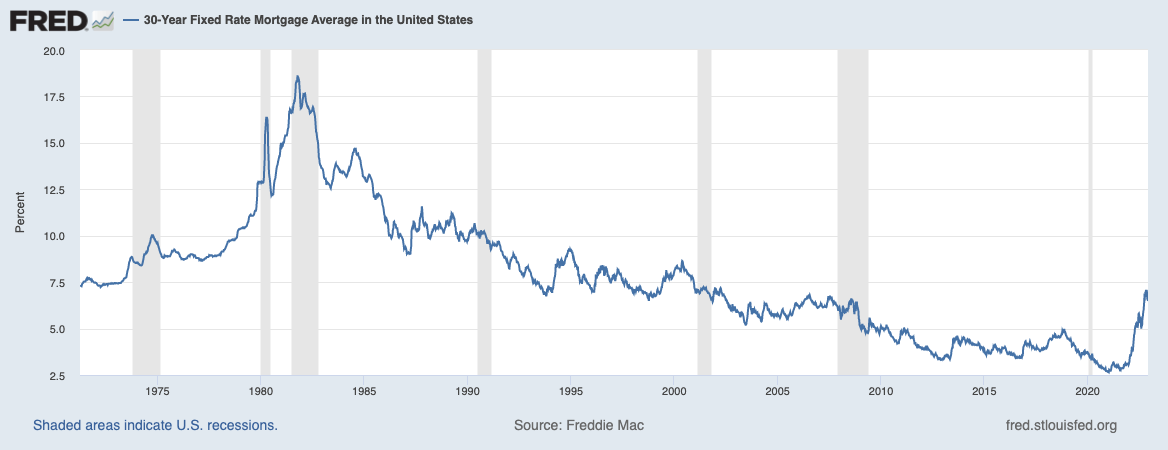

Money was cheap for a long time, but corrections were on the way.

For some perspective, according to Standford economist John Taylor, inflation “jumped from 1.4% in the 12-month period from January 2020 to January 2021 to 9.1% in the 12-month period from June 2021 to June 2022.” He also sheds light on the fact that most misunderstand that one of the key drivers of inflation is the artificially low federal fund rate (the overnight bank-to-bank borrowing rate) that has been kept low for too long. Sitting in the low 2% range (at the time of this writing), the discrepancy between it and the 7-8% 30-year mortgage rate doesn’t bode well for the average consumer and is a leading indicator of things to come.

As markets do, the housing market started to correct itself. Its catalyst? The Covid pandemic and the ensuing home-buying frenzy that was set into motion. At first, when the pandemic was “new” and everyone started the process of learning how to work from home, rates stayed low…then boredom hit. People started the work-from-home shift and got bored with where they lived; it really is that simple. So we all started buying new homes. It was dog-eat-dog in the housing market. A correction was bound to happen.

Covid provided for the perfect storm to ensue. Coupled with the war in Ukraine, supply lines were stressed (and they still are to an extent) and in some cases, completely choked off. We’re still feeling that stress now.

Oil companies, largely with the help of OPEC, have posted record profits. According to PBS.org, ExxonMobil posted profits of nearly $20 billion, Chevron banked more than $11 billion, Shell had $9.5 billion, and BP made over $8 billion. Saudi Aramco, the world’s largest oil company, posted $42 billion in profit.

That was all in Q3 of 2022.

President Biden has called this a “windfall of war” as Ukraine still struggles with its battle to stay sovereign against Russia. He has called on OPEC to increase production in the wake of the organization cutting the number of barrels produced per day to put the supply/demand curve back in consumers’ favor. Russia, being a large oil producer with new sanctions put in place, has also furthered the pump prices. Supply and demand aren’t really working in our favor. The war has had a huge impact on global energy markets, and as you’ll see later, could have lasting impacts on the inflated nature of our economy.

All of this has placed stress on everything we consume. It’s now more expensive to produce and transport nearly everything. This all rolls downhill to consumers. We’re all paying the price, and much of that happens each time we drive.

It’s also worth noting that inflation isn’t unique to the US (9.1%). The United Kingdom has been looking at a 10.1% inflation rate, and Turkey has been dealing with a 79.6% inflation rate according to Forbes.

What Impact is This Likely to Have on Workers’ Comp?

Many industry experts don’t expect inflation to have a massive impact on the costs associated with workers’ comp insurance. The reasons for this are many, but they provide an optimistic outlook on what this means for insurers and consumers alike.

According to this article, premiums are actually staying stable for several reasons: “…due to several years of favorable experience, NCCI’s [National Council on Compensation Insurance] filed loss costs have generally gone down in the last few years, minimizing upward pressure on premiums,” said Barry Lipton, practice leader and senior actuary at NCCI. The National Association of Social Insurance (NASI) supports this assertion stating that premiums per $100 of insured payroll are at a 20-year minimum. “So, while wage inflation is very impactful to workers’ comp benefits and premium, the impact is benign as benefits keep up with inflation and premium stays in balance with benefits automatically,” said Lipton.

Another interesting point: among the rising wages and benefits for workers on the ground, we’re see that higher-paid workers end up being safer workers. They make fewer errors resulting in claims. That being said, wage growth is usually looked at as a favorable thing with regard to workers’ compensation insurance based on these tertiary benefits.

What’s more is that the Federal Reserve Bank of New York recently did a survey and found that median inflation rates for next year (2023) and three years from now are expected to fall; this has eased the idea that we’re in this for the long haul.

This doesn’t mean you shouldn’t watch your claims costs and how they’re riding the wave inflation is causing. Fewer claims are great, but that doesn’t underscore the fact that it’s still more expensive to recover per claim. Materials costs are up, medical costs are up, and vehicle costs are up — these are all a recipe for increased payouts if claims go up.

With all this in mind, McKinsey and Company have found three likely situations to play out in the next three years. We’ll start with the best situation and move to the less preferable. (As you know, this is all speculation; no one can see the future, but based on what is going on now, many think these three options are viable moving forward.)

First, an optimistic look toward stabilization. In this scenario, energy, food, and commodity markets would stabilize market-wide, and the Fed would most likely continue on its path of raising policy rates by 3-4% with inflation rates most likely receding in 2023. “For insurers, this is likely to represent a near-term erosion in combined ratios (losses and expenses in relation to total collected premiums) and overall profitability, but with an ultimate return to long-term norms. This scenario favors carriers with large and diversified portfolios, healthy surpluses, and operational excellence, particularly in expense and claims management.

Next would be continued disruption. If the war in Ukraine and Covid continue to put pressure on market forces, disruption will likely continue. Commodities and energy prices will remain in flux and create unease regarding inflation; this will most likely force the Fed to bring policy rates above four percent with some estimates suggesting it being well above four. “For insurers, this scenario would translate into more persistent profitability challenges—a worse scenario than one with consistently higher inflation. Claims costs would continue to rise because of disruptions in global commodity markets, but moderate general inflation could prevent insurers from increasing premiums for customers. The result could be a severe contraction in underwriting capacity and a hard market with more stringent underwriting standards. Insurers that come out ahead will be those with superior underwriting and pricing discipline and a focus on profitable pockets of the market.” This would be bad for both consumers and insurers.

Lastly, we could see persistently elevated inflation. Here, we could see energy and commodity prices facing long-term inflated rates. In this scenario, the Fed may not be able to hike rates to a point that helps bring inflation back down. This could lead to a prolonged phase of stagflation which is marked by high interest rates that won’t budge and an imbalance in economic growth. “For insurers, this scenario would cause significant short-term disruption in combined ratios and underwriting profit. However, as sometimes happens in foreign markets with persistently high inflation, the long-term outlook might permit premiums and investment returns to rise at the same pace as expenses and loss costs. This market will favor P&C carriers that can bring operational excellence to the entire value chain, especially those with better pricing strategies and underwriting discipline.” This scenario is still considered unlikely.

Key Takeaways

In all likelihood, and according to these sources, inflation probably will have a minimal impact on P&C insurance, which contains workers’ comp. Market factors seem not to point directly at this vertical, but that doesn’t mean it’s bulletproof. Caution should be exercised in these uncertain times. In the three scenarios above, pay special attention to the bolded areas. It can’t hurt to be prepared if the worst is to happen.

The next uninsured third-party partner won't announce themselves.

illumend catches the gap.
You save the project.

Get started

Blog & Insights

Moving Beyond the Outdated Insurance Compliance Model

What Are Policy Limits?

Policy limits are the maximum an insurer will pay under a policy. Learn how per-occurrence and aggregate limits work and how to verify them on a COI.
Insurance Knowledge

What Is Insurance Renewal Tracking?

Renewal tracking means monitoring policy expiration dates and collecting updated certificates so coverage never lapses. Learn why it is the top source of non-compliance.
Insurance Knowledge

What Are Insurance Requirements?

Insurance requirements are the coverage types, limits, and endorsements you require partners to carry. Learn how to set clear requirements for COI compliance.
Insurance Knowledge

What Is an Insurance Exclusion?

An insurance exclusion is a policy provision that removes specific risks from coverage. Learn what exclusions are, common examples, and why they matter for COI review.
Insurance Knowledge

Moving Beyond Spreadsheets to Manage Construction Risk

Insurance Knowledge
Informational
Guides & How-Tos

Compete in a Crowded Industry with the Right Insurance Technology

Insurance Knowledge
Informational
Comparisons & Buyer Resources

Has Your Organization Been Hurt By Insurance Claims?

Insurance Knowledge
Educational
Guides & How-Tos

Construction Industry Trends For Additional Insureds

Insurance Knowledge
Educational
Perspectives

How Insurance Agents Can Achieve Clients For Life

Insurance Knowledge
Educational
Guides & How-Tos

Get Your Team Off Your Back About COI Tracking

Insurance Knowledge
Educational
Guides & How-Tos

You Could Be Saving 30% on Insurance Tracking Costs

Insurance Knowledge
Educational
Guides & How-Tos

Tip# 1 – The “INSURED” Box

Insurance Knowledge
Educational
Guides & How-Tos

Constructing A Strong Contract

Insurance Knowledge
Educational
Guides & How-Tos

Are You Really an Additional Insured?

Insurance Knowledge
Educational
Guides & How-Tos

Insurance Agents: Watch Your Client Base Grow

Insurance Knowledge
Educational
Guides & How-Tos

What You Need to Know About Certs and Real Estate

Insurance Knowledge
Educational
Guides & How-Tos

Insurance and Cannabis: What You Need to Know

Insurance Knowledge
Educational
Guides & How-Tos

Create a Unique Agency Sales Strategy with myCOI

Insurance Knowledge
Educational
Comparisons & Buyer Resources

Important Steps for Managing Risk Using Your RFP

Insurance Knowledge
Educational
Guides & How-Tos

Cybersecurity and Remote Work: Managing the Risks

Insurance Knowledge
Educational
Guides & How-Tos

Blanket Endorsements: The ‘Am I Covered’ Checklist

Insurance Knowledge
Educational
Guides & How-Tos

10 Tips for Transferring Contractual Risk

Insurance Knowledge
Educational
Guides & How-Tos

myCOI Gives Back to the Community

Insurance Knowledge
Educational
Perspectives

A Guide to myCOI’s Go-To Insurance Resources

Insurance Knowledge
Educational
Guides & How-Tos

Here’s What You Need to Know About Example COIs

Insurance Knowledge
Educational
Guides & How-Tos

When You Need a Sample COI, Think ACORD

Insurance Knowledge
Educational
Guides & How-Tos

Here’s What You Need to Know About COIs

Insurance Knowledge
Educational
Guides & How-Tos

Insurance Compliance Will Be a Critical Role in 2022

Insurance Knowledge
Educational
Guides & How-Tos

Always, Always Remember that ACORD is not an Insurer

Insurance Knowledge
Educational
Guides & How-Tos

Agents: Your Insureds Deserve Automated COI Tracking

Insurance Knowledge
Educational
Guides & How-Tos

The Right Compliance Management Software is Crucial

Insurance Knowledge
Educational
Comparisons & Buyer Resources

The ABCs of Certificate of Insurance Compliance

Insurance Knowledge
Educational
Guides & How-Tos

A COI Template Will Only Take You So Far

Insurance Knowledge
Educational
Guides & How-Tos

The Importance of A Signed Contract

Insurance Knowledge
Educational
Guides & How-Tos

Checking More Than Just Expiration Dates

Insurance Knowledge
Educational
Guides & How-Tos

Dominate Your Insurance Agency Earning Power

Insurance Knowledge
Educational
Guides & How-Tos

Additional Insured Updates You Need to Know

Insurance Knowledge
Educational
Guides & How-Tos

Is COI the same as liability insurance?

Insurance Knowledge
Educational
Guides & How-Tos

The Basics of Quarterly Tracking

Insurance Knowledge
Educational
Guides & How-Tos

The Basics of Additional Insured Endorsements

Insurance Knowledge
Educational
Guides & How-Tos

What Is a COI in Contracting?

Insurance Knowledge
Educational
Guides & How-Tos

What Is A Certificate Of Insurance (COI) For?

A certificate of insurance (COI) is a one-page document issued by an insurer or broker that summarizes an insurance policy's key details, including its coverage types, limits, effective dates, and named parties, as proof that coverage is in force.
Insurance Knowledge
Educational
Guides & How-Tos

Primary and Noncontributory Endorsement Form

Insurance Knowledge
Educational
Guides & How-Tos

7 Strategies for Managing Insurance Renewals

Insurance Knowledge
Educational
Guides & How-Tos

General Liability Certificate of Insurance

Insurance Knowledge
Educational
Guides & How-Tos

Certificate of Property Insurance

Insurance Knowledge
Educational
Guides & How-Tos

How to Check If a Business Has Insurance

Insurance Knowledge
Educational
Guides & How-Tos

How do I get an insurance certificate?

Insurance Knowledge
Educational
Guides & How-Tos

Customer Asking for Certificate of Insurance

Insurance Knowledge
Educational
Guides & How-Tos

How Do I Get a Certificate of Insurance in the USA?

Insurance Knowledge
Educational
Guides & How-Tos

The Basics: Waiver of Subrogation

Insurance Knowledge
Educational
Guides & How-Tos

What Is A Surety Bond and Why You Need One

Insurance Knowledge
Educational
Guides & How-Tos

You Need MORE Than Just Holding COIs

Insurance Knowledge
Educational
Guides & How-Tos

The Wrong COI is Just as Bad as No COI

Insurance Knowledge
Educational
Guides & How-Tos

It’s Easy to Create Your Own COI. Don’t Do it.

Insurance Knowledge
Educational
Guides & How-Tos

5 Things to Do to Verify Your COI is Valid

Insurance Knowledge
Educational
Guides & How-Tos

Finding a Certificate of Insurance Online is a Risk

Insurance Knowledge
Educational
Guides & How-Tos

Premiums Are On the Rise

Insurance Knowledge
Educational
Guides & How-Tos

A COI Example Can be a Great Guide—Or a Burden

Insurance Knowledge
Educational
Guides & How-Tos

Contractors Pollution Insurance

Insurance Knowledge
Educational
Guides & How-Tos

COI Real Estate

Insurance Knowledge
Educational
Guides & How-Tos

Broker Certificate of Insurance

Insurance Knowledge
Educational
Guides & How-Tos

Building Certificate of Insurance

Insurance Knowledge
Educational
Guides & How-Tos

What Is An LLC Certificate of Insurance?

Insurance Knowledge
Educational
Guides & How-Tos

Who Is Responsible for Subcontractors’ Work?

Insurance Knowledge
Educational
Guides & How-Tos

Do Contractors Need Insurance?

Insurance Knowledge
Educational
Guides & How-Tos

Construction Insurance Risk Management

Insurance Knowledge
Educational
Guides & How-Tos

Subcontractor Default Insurance: Everything You Need To Know

Insurance Knowledge
Educational
Guides & How-Tos

How Do You Calculate Building Construction Coverage?

Insurance Knowledge
Educational
Guides & How-Tos

What Is Regulatory Compliance in Construction?

Insurance Knowledge
Educational
Guides & How-Tos

What Is Not Usually Covered by Building Insurance?

Insurance Knowledge
Educational
Guides & How-Tos

What Is Considered a Third-Party Insurance?

Insurance Knowledge
Educational
Guides & How-Tos

What Is a COI in Construction?

Insurance Knowledge
Educational
Guides & How-Tos

Types of Construction Insurance

Insurance Knowledge
Educational
Guides & How-Tos

Why Is Builders’ Risk Insurance so Expensive?

Insurance Knowledge
Educational
Guides & How-Tos

What Is Builders’ Risk Insurance?

Insurance Knowledge
Educational
Guides & How-Tos

Third-Party Insurance Verification

Insurance Knowledge
Educational
Guides & How-Tos

Why Should I Outsource COI Tracking to myCOI?

Insurance Knowledge
Educational
Comparisons & Buyer Resources

Insurance Tracking Services

Insurance Knowledge
Educational
Guides & How-Tos

How Can You Track Insurance Policies?

Insurance Knowledge
Educational
Guides & How-Tos

What Is Insurance Certificate Tracking?

Insurance Knowledge
Educational
Guides & How-Tos

How to Ensure Contractor Compliance

Insurance Knowledge
Educational
Guides & How-Tos

myCOI Expands Procore Integration to Simplify Compliance and Payments

Insurance Knowledge
Educational
Comparisons & Buyer Resources

How Do I Generate a Certificate of Insurance?

Insurance Knowledge
Educational
Guides & How-Tos

Why Does a Company Need a Certificate of Insurance?

Insurance Knowledge
Educational
Guides & How-Tos

What Is an Insurance Certificate for a Business?

Insurance Knowledge
Educational
Guides & How-Tos

How Much Does a COI Cost in the USA?

Insurance Knowledge
Educational
Guides & How-Tos

How Important Is a Certificate of Insurance?

Insurance Knowledge
Educational
Guides & How-Tos

What Are COIs? A Guide To Certificates of Insurance

Insurance Knowledge
Educational
Guides & How-Tos

Agents: Help Contractors Manage Insurance Risks

Insurance Knowledge
Educational
Guides & How-Tos

What Is COI in Risk Management?

Insurance Knowledge
Educational
Guides & How-Tos

What Are the Five Elements of Risk Management?

Insurance Knowledge
Educational
Guides & How-Tos

What Is a Third-Party Risk Management System?

Insurance Knowledge
Educational
Guides & How-Tos

What Are the Key Elements of Third Party Risk Management?

Insurance Knowledge
Educational
Guides & How-Tos

Compliance in the Construction Industry

Insurance Knowledge
Educational
Guides & How-Tos

Third-Party Risk Management in Construction

Insurance Knowledge
Educational
Guides & How-Tos

You don't have to understand insurance to be good at insurance compliance.

With Lumie™, compliance is covered. So is everyone on your project.

Get started

Get The Lantern

illumend updates, designed to light the way to insurance confidence.
Thank you! Your submission has been received!
Oops! Something went wrong while submitting the form.