
How to Evaluate AI-Powered COI Compliance Software: 10 Questions That Matter


Not all AI-powered COI compliance platforms are built the same, and the gap between them shows up in the documents your current process is already missing.
Whether you're managing COI compliance for a construction general contractor, a manufacturing supplier program, a property management portfolio, or a government services operation, these questions are designed to cut through the demo polish and surface what actually matters: how the platform performs on your documents, in your workflow, with your team.
Use them before you commit.
Part 1: What Does the AI Actually Do? Questions on Accuracy and Capability
Question 1: What Is Your Documented Accuracy Rate, and on What Types of Documents?
The direct answer you need: A specific percentage on complex documents: layered coverage structures, non-standard ACORD forms, unusual endorsements. Not adjectives. Numbers.
Any platform worth evaluating should be able to tell you specifically how accurately it reads key fields: policy limits, effective dates, coverage types, named insured, ACORD 25 certificate data, ACORD 28 commercial property evidence. Vague answers here are a red flag.
Push for accuracy rates specifically on complex documents: non-standard endorsements, layered coverage structures, certificates with multiple additional insured requirements. That's where the difference between platforms actually shows up, and it’s where your highest-risk subcontractors and vendors are most likely to submit non-compliant documents.
Question 2: How does the platform validate ACORD 25 and ACORD 28 compliance?
The direct answer you need: Confirmation that the platform validates certificate data against both ACORD 25 (certificate of liability) and ACORD 28 (commercial property evidence) standards, including endorsement requirements and certificate holder verification.
ACORD 25 and ACORD 28 are the foundation of certificate of insurance compliance, but not all platforms validate against them with equal rigor. A platform that confirms a certificate "exists" is not the same as one that verifies the coverage limits, endorsement language, and named insured against your specific contract requirements.
Ask whether the platform validates the certificate holder name against the contracting entity. Ask whether it checks additional insured endorsements against the specific endorsement forms your contracts require. Ask what happens when a subcontractor submits an ACORD form with limits that technically meet the threshold but are structured to exclude your project location or scope.
Question 3: How do your AI models stay current with changing insurance forms?
The direct answer you need: A clear retraining cadence and a named team or process responsible for keeping models current as ACORD standards, coverage language, and industry requirements evolve.
Insurance forms evolve. ACORD updates its standards. Coverage language shifts, and what was compliant under one set of industry norms may not be under another. Ask how often the platform's models are retrained, who's responsible for keeping them accurate, and whether the training data reflects your industry specifically.
A platform built on 16 years of compliance expertise and 45 million documents reviewed has a meaningful advantage over one trained on generic insurance data. The breadth and recency of training data directly affects what the AI can accurately interpret, particularly on the complex, non-standard documents that generate the most real-world compliance exposure.
Question 4: Can you run a live demo using our actual documents?
The direct answer you need: Yes, without caveats. Any platform worth evaluating should process your real-world documents: including messy formatting, unusual endorsements, and legacy ACORD forms.
A polished demo using pre-selected, clean data tells you very little about how the platform will perform on your actual vendor base. Any serious platform should be willing to process your documents: non-standard endorsements, construction subcontractor certificates, manufacturing supplier COIs, property management vendor submissions.
If a vendor hesitates to run a demo on your real documents, that hesitation is informative. It means the platform performs better in controlled conditions than in production, which is the opposite of what you need.
Part 2: How Deep Does the Compliance Go? Questions on Coverage Depth and Security
Question 5: How does the platform handle industry-specific requirements?
The direct answer you need: Evidence that the platform is built for your industry, not just adapted to fit it, including specific coverage thresholds, endorsement requirements, and state-specific rules relevant to construction, manufacturing, property management, or government procurement.
COI compliance in construction looks different from real estate management, which looks different from manufacturing supplier programs, which looks different from government services contracting. Coverage thresholds, endorsement requirements, additional insured language, and state-specific rules all vary significantly by industry and jurisdiction.
Ask whether the platform supports industry-specific compliance rules for your segment. A construction GC needs to verify subcontractor certificates against project-specific contract requirements. A property management firm needs to validate tenant and vendor COIs against lease terms. A manufacturing operation needs to check supplier certificates against procurement agreements. The platform should reflect these differences, not require you to configure generic rules to approximate them.
| Industry | Key COI Compliance Requirements | What to Verify in Platform |
|---|---|---|
| Construction | Subcontractor COIs, project-specific limits, additional insured endorsements, ACORD 25 validation | Certificate holder matching, project-level requirements, endorsement form validation |
| Manufacturing | Supplier certificates, procurement agreement thresholds, product liability coverage | Supplier onboarding workflow, coverage type verification, renewal tracking |
| Property Management | Tenant and vendor COIs, lease-term validation, ACORD 28 for property coverage | Portfolio-level tracking, multi-property management, lease requirement mapping |
| Government / Public Services | Contractor COIs, public liability requirements, state-specific coverage mandates | Jurisdiction-specific rules, audit trail for public procurement compliance |
| Industrial / Manufacturing | Environmental liability, pollution coverage, workers' comp verification | Coverage type depth, endorsement interpretation, multi-location tracking |
Question 6: What are your data security protocols?
The direct answer you need: SOC 2 certification, data encryption at rest and in transit, access controls, document retention policy, and a clear answer on who can access your third-party insurance data.
You're sharing sensitive third-party insurance documentation: policy numbers, coverage limits, named insured information for your entire vendor and subcontractor base. This isn't a nice-to-have verification. Ask about SOC 2 certification, data encryption standards, role-based access controls, and document retention policies. Your legal and IT teams will flag these questions if you don't ask them first.
Question 7: How do you identify and address inconsistencies in compliance decisions?
The direct answer you need: A clear description of how the platform audits its own outputs, handles edge cases, and escalates documents that fall outside standard parameters, without routing everything to a paid human-review add-on.
AI systems can produce inconsistent outputs, especially when trained on limited or unrepresentative data. Ask how the platform audits its own compliance determinations and what happens when edge cases arise. Ask specifically about layered coverage structures, unusual endorsements, and non-standard ACORD forms, which is precisely where most real-world compliance exposure lives.
Some platforms route complex documents to a paid human-review add-on. That's not necessarily wrong, but it's worth knowing upfront, both for budget planning and for understanding where the platform's AI capability actually ends.
Part 3: What Does It Feel Like to Use? Questions on Experience for Your Team and Your Partners
Question 8: What does the submission experience look like for our third-party partners?
The direct answer you need: A clear description of what a subcontractor, vendor, or tenant sees when they open the submission link, including whether they get real-time feedback on what's missing and why.
Vendor adoption quietly determines whether any compliance platform actually works. A tool that frustrates your subcontractors will bottleneck at document submission. No matter how good the dashboard is on your side. This is especially true in construction, where subcontractor onboarding speed directly affects project timelines, and in manufacturing, where supplier onboarding affects production schedules.
Ask what happens after a partner opens the submission link. Do they get real-time feedback on gaps? Can they see exactly what's missing and why? Or do they get a generic rejection and a follow-up email three days later? The difference in onboarding speed between a clear, self-service submission experience and a friction-heavy one is measurable, and it affects your compliance rates before the AI does anything.
Question 9: Is there a human oversight option when the AI isn't certain?
The direct answer you need: A specific description of how uncertain documents are flagged, what information your team sees when they review a flagged document, and whether the escalation path is built into the platform or handled externally.
The best platforms sharpen your team's judgment rather than replace it. Ask whether compliance decisions can be flagged for human review and how that escalation works in practice. This design choice is also central to who bears the risk when the software gets it wrong: a clear escalation path with full context is what makes a flagged decision defensible later.
The platforms that genuinely reduce risk are the ones that give your team better information to make better decisions, not just more decisions to make. When a construction compliance manager reviews a flagged subcontractor certificate in illumend, they see exactly what the AI found, what it flagged, and what the gap means against your specific contract requirements. That's a level of decision support that was never available in a manual process.
Part 4: Will It Actually Work With Your Stack? Questions on Implementation, Integration, and Partnership
Question 10: How does the platform integrate with existing risk management workflows?
The direct answer you need: Specific integrations with the risk management, ERP, procurement, or property management systems your team already uses, and a clear API or connector roadmap for systems not yet supported.
COI compliance doesn't live in isolation. For construction operations, it connects to subcontractor onboarding and project management workflows. For manufacturing, it connects to procurement and supplier management systems. For property management portfolios, it connects to lease management and tenant onboarding platforms.
Ask specifically which integrations the platform supports today and what the implementation path looks like for your existing stack. Ask whether the platform can ingest compliance data from your current systems or requires a full migration. The answer tells you whether you're adding a new tool or genuinely integrating your compliance workflow, which affects both adoption speed and long-term ROI.
Bonus Question: What Does Implementation Actually Look Like, and What's on the Roadmap?
"Easy to set up" means something different to every platform. Ask for a realistic implementation timeline, a clear onboarding plan, and what your team needs to do to get from contract to go-live. Hidden complexity at implementation is one of the most common reasons AI compliance tools end up unused after purchase.
Also ask how customer feedback shapes product development. A platform that has been built once and maintained is very different from one that actively evolves based on what compliance teams actually need. The answer tells you whether you're buying a product or a partnership.
What Separates a Platform Worth Buying from One That Isn't?
| Capability | What to Look For vs. What to Avoid |
|---|---|
| ACORD 25 / ACORD 28 validation | Full field validation against contract requirements vs. existence check only |
| AI accuracy on complex docs | Documented rates on layered endorsements vs. demo-only performance |
| Human escalation | Built-in with full context vs. paid add-on or external process |
| Audit trail | Timestamped decision record for every COI vs. approve/reject only |
| Partner submission UX | Real-time gap feedback for vendors vs. generic rejection + follow-up email |
| Industry specificity | Built for your segment vs. generic rules requiring custom configuration |
| Risk management integration | Native connectors to existing workflows vs. standalone silo |
| Model currency | Regular retraining on current ACORD standards vs. static training data |
Ready to Put These Questions to Work?
The platforms that answer these questions clearly, specifically, and without hesitation are the ones worth your time. The ones that redirect, generalize, or rely on demo theater are telling you something important.
illumend, from myCOI, is built on 16 years of compliance expertise and more than 45 million documents reviewed. We'll answer every one of these questions: with documented accuracy rates, with ACORD validation specifics, with integration details, and with your actual documents if you want to see it in action.
45M+ documents reviewed | 1.2M+ agreements managed | 750K+ third-party partners cleared | 2M+ coverage gaps flagged before claims
Frequently Asked Questions
Q: How do I evaluate and select COI compliance software for a construction operation?
Start with accuracy on complex documents, specifically ACORD 25 validation, endorsement interpretation, and named insured verification against your contract requirements. Then assess the subcontractor submission experience, human escalation design, and integration with your existing project management and risk management workflows. Run a live demo on your actual subcontractor documents, not pre-selected clean data. The 10 questions in this guide give you a complete evaluation framework before you commit.
Q: What are the key features of AI-powered COI compliance software for risk managers?
The features that matter most for risk managers are: contextual AI that interprets endorsement language (not just OCR text extraction), automated ACORD 25 and ACORD 28 validation against contract-specific thresholds, a structured human escalation path with full compliance context, a complete audit trail for every compliance decision, and real-time gap detection with automated renewal tracking. illumend provides all of these, built on 16 years of compliance expertise and 45M+ documents reviewed.
Q: How do AI-driven COI management solutions integrate with construction and property management workflows?
Leading platforms offer native integrations with construction project management systems, property management platforms, ERP systems, and procurement workflows, allowing COI compliance data to flow directly into the systems your team already uses for vendor management, subcontractor onboarding, and risk reporting. During evaluation, ask for a specific list of current integrations and an API roadmap for systems not yet supported. Integration depth is often the difference between a compliance tool that gets adopted and one that creates a parallel process nobody maintains.
Q: What is the difference between OCR-based and AI-powered COI compliance software?
OCR-based platforms extract text from certificates and match it against a checklist. They confirm data exists but don't interpret what it means in context. AI-powered platforms like illumend read COI documents the way a knowledgeable compliance reviewer would: interpreting endorsement language, understanding coverage relationships, validating ACORD 25 and ACORD 28 fields against your specific contract requirements, and flagging ambiguity rather than auto-approving it. The practical difference shows up most clearly on complex documents, layered coverage structures, unusual endorsements, non-standard forms, which is exactly where your highest-risk compliance gaps are most likely to be.
Q: How can insurance compliance software reduce manual verification errors in certificate tracking?
By removing manual data entry from the compliance process entirely. AI-powered platforms automatically extract and validate certificate data against your compliance requirements, flag gaps in real time, and route exception cases to human review with full context rather than requiring manual review of every document. illumend customers report eliminating the majority of manual review volume, freeing compliance teams to focus on the edge cases that require human judgment rather than routine document processing across their subcontractor and vendor base.
Ready to put these questions to work?
Schedule a Demo, or take our buyer’s guide into your next vendor call.
The next uninsured third-party partner won't announce themselves.
illumend catches the gap.
You save the project.
Blog & Insights


Building a COI Tracker with AI: What It Takes, and What It Misses
How Much Does COI Tracking Software Cost?

illumend vs. Billy: which one gets your whole vendor base compliant?
illumend vs. Jones: Which COI tracking platform actually gets your partners to compliance?

AI-First vs Humans-First COI Software: Key Differences

How do you modernize your COI tracking program?

COI Compliance Software ROI: How to Make the Case to Your Leadership Team

Who Bears the Risk When AI COI Compliance Software Gets It Wrong?
.webp)
A Guide To COI Tracking For Property Management
.webp)
How To Track Insurance Policies: A Guide

Best Software for Contractor Insurance Compliance in 2026: 7 Options Compared
illumend vs TrustLayer (2026): COI Compliance Software Compared
Why illumend Is Different: Moving Beyond the Outdated Compliance Model
Why AI Is the Future of Compliance
%20Software%20In%202026.webp)
How To Choose COI Tracking Software in 2027: A Buyer's Guide

The Cost of Manual COI Tracking: The True Guide

What Are the Best AI-Powered COI Tracking Software Options?
The AI Advantage: How Smart Tech is Changing COI Review Forever

The 3 Paths to COI Review: In-House, Outsourced, or AI
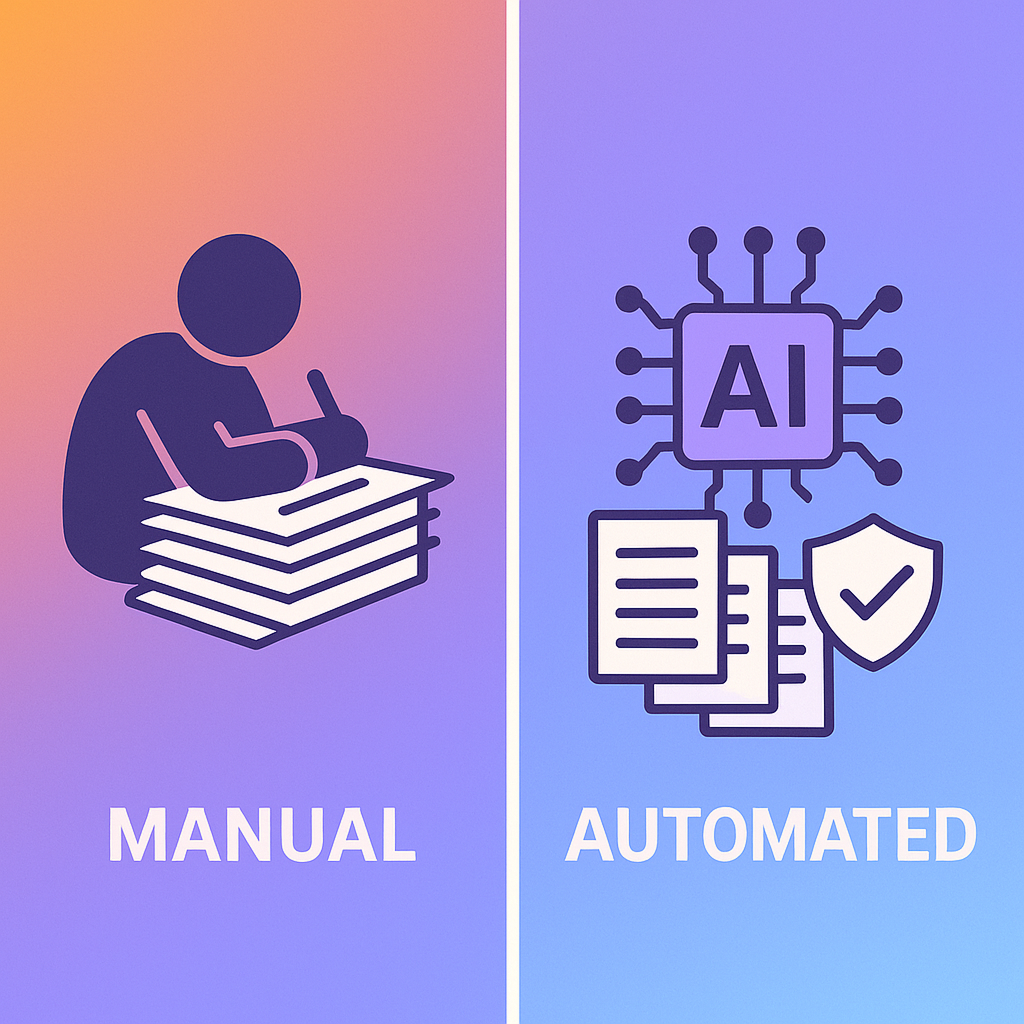
Manual vs. Automated COI Review: What You Gain (and What You Risk) With Each Approach
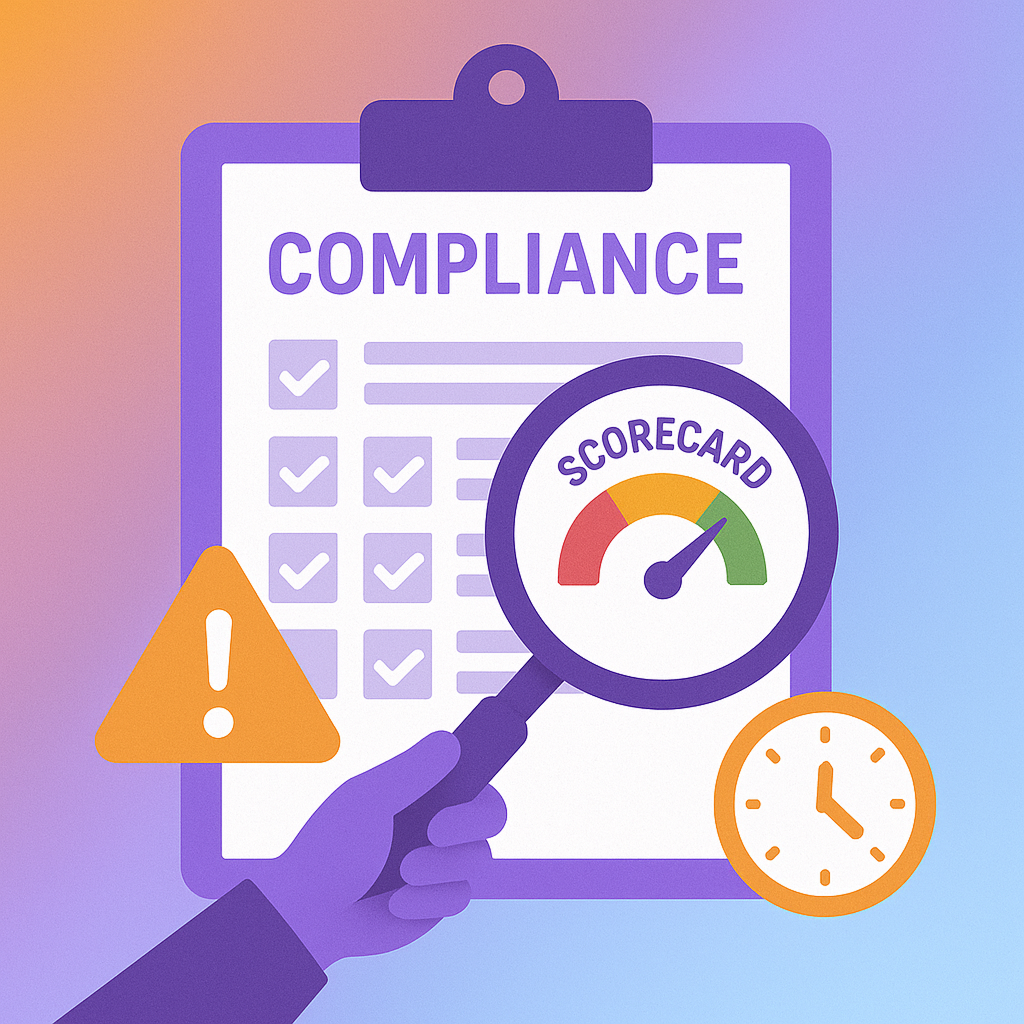
COI Compliance Scorecard: Where Does Your Process Stand?
Broker Myths: “But Our Broker Handles This…” (and Other Misconceptions)

6 Signs Your COI Process Is Putting You at Risk
5 Trends Shaping the Future of Compliance (and What They Mean for COI Management)

You don't have to understand insurance to be good at compliance.
With Lumie, compliance is covered. So is everyone on your project.

Get The Lantern
.avif)