











.webp)









%20and%20Why%20Is%20It%20Critical%20for%20Your%20Business.jpeg)



%20Software%20In%202026.webp)



.jpg)















.avif)

.webp)
Waiver of Subrogation: What It Is & How It Works
A waiver of subrogation is a policy endorsement in which your insurer gives up (waives) its right to recover a paid claim from an at-fault third party you name in the endorsement. In plain terms, if your insurer pays a loss that another party caused, the waiver stops your insurer from later going after that party to get its money back. Businesses add it because a contract — a construction agreement, a commercial lease, or a service contract — requires it, so that a partner cannot be pursued by your insurance company after a covered loss.
This guide explains the waiver of subrogation meaning in practical terms: what subrogation is, how the endorsement works, what it typically costs, how blanket and specific waivers differ, the workers' compensation nuance every employer should know, and how the waiver shows up on a certificate of insurance. For the broader document that carries this endorsement, see our certificate of insurance (COI) guide.
Key Takeaways
- What it is: A waiver of subrogation is an insurance policy endorsement in which the insurer waives its right to recover a paid claim from a specific at-fault third party.
- How it's added: It is not automatic. It is added by endorsement to a policy — most often general liability, workers' compensation, or property — usually because a contract requires it.
- Cost: It typically raises premium slightly. General liability often carries a small flat or minimum charge; workers' compensation blanket waivers commonly run about 2–5% of premium, subject to a minimum charge (often around $300). Frame these as ranges — pricing varies by insurer and state.
- Blanket vs. specific: A blanket waiver covers any party you're contractually required to waive against; a specific (scheduled) waiver names one party. Blanket is easier to administer; specific is narrower.
- Where it's common: Construction contracts, commercial leases, government contracts, and manufacturing/supplier agreements routinely require it.
- How it shows up: On an ACORD 25 certificate it appears as a checked box and a note in the Description of Operations; the proof is the endorsement form attached to the policy.
- Not the same as additional insured: An additional insured endorsement *extends coverage to* a party; a waiver of subrogation *gives up recovery against* a party. They are frequently confused but do different jobs.
What Is a Waiver of Subrogation?
A waiver of subrogation is an endorsement that removes your insurer's right to seek reimbursement from a third party after the insurer pays your claim. Normally, when your insurer pays for a loss that someone else caused, it can "step into your shoes" and pursue that at-fault party to recoup what it paid. A waiver of subrogation endorsement switches that right off for the party (or parties) named in the endorsement.
The waiver protects the *other* party, not you. If you sign a contract agreeing to a waiver of subrogation in favor of a client or landlord, you are arranging for your insurer to give up any recovery action against that client or landlord — even if they were partly or wholly at fault for a loss your policy paid. That is precisely why contracts ask for it: it caps the downstream liability exposure between business partners who have agreed to allocate risk to insurance rather than to each other.
Because it changes the insurer's rights, a waiver of subrogation must be documented on the policy itself through an endorsement — a verbal promise or a line in a contract is not enough. According to the Insurance Information Institute, endorsements are the standard mechanism for adding, restricting, or modifying the coverage and rights in a base policy, and a waiver of subrogation is one such modification.
How Does a Waiver of Subrogation Work?
A waiver of subrogation works by contract and endorsement together: the contract requires the waiver, and the insurer adds an endorsement to the policy that surrenders its subrogation right against the named party. The mechanics generally run like this:
1. A contract requires it. Two parties sign an agreement — for example, a construction contract or a lease — that includes a mutual or one-way waiver of subrogation clause.
2. You request the endorsement. You (or your broker) ask your insurer to add a waiver of subrogation endorsement in favor of the required party, either as a blanket waiver or a specific one.
3. The insurer issues the endorsement. The insurer attaches the endorsement, usually for a small additional premium, and the policy now reflects that it will not subrogate against the named party.
4. A loss occurs and is paid. If a covered loss happens that the named party caused, your insurer pays your claim as usual.
5. The insurer does not pursue the named party. Because of the waiver, the insurer forgoes its recovery action against that party.
The key practical point: the waiver must be in force *before* the loss occurs. A waiver added after a claim generally cannot revive a right the insurer has already begun to exercise. This is why compliance programs verify the endorsement on the policy — not just a checkbox on a certificate. Modern COI tracking software reads the endorsement pages so you can confirm the waiver actually exists on the policy.
What Is a Certificate of Insurance, and Why Should You Ask for One?
Before hiring a contractor or vendor, it's worth confirming that they carry the right insurance coverage. A Certificate of Insurance gives you a quick, standardized way to verify that protection.
What Does Proof of Insurance Actually Look Like for a Business?
Checking a business's insurance starts with requesting a Certificate of Insurance, or COI. It’s a standardized one-page document that summarizes active coverage, policy limits, and effective dates. That's it. One page, one document, one clear snapshot.
Requesting a COI is completely routine. Any third-party partner you hire, whether a contractor, vendor, or subcontractor, should be able to provide one quickly. It's the same request a bank makes before approving a commercial lease, or a general contractor makes before a project kicks off. Asking for it doesn't signal distrust. It signals professionalism.
What Coverage Types Should Be Listed on the Certificate?
When you review a certificate of insurance, four coverage types matter most:
General liability insurance covers third-party claims for property damage and bodily injury. If a contractor breaks something on your job site or someone gets hurt, this is the coverage that responds.
Workers compensation covers a contractor's employees if they're injured on the job. Without it, that liability can land on you.
Auto liability covers accidents involving vehicles used for business purposes. This is important any time a third-party partner is driving to or from your site.
Umbrella/Excess Liability sits on top of the other policies and extends coverage when a claim exceeds primary limits.
You'll also want to check the policy limits (the dollar amounts listed in each coverage row). Higher-risk work or larger contracts typically call for higher limits. If a project requires a minimum of $1 million in general liability, the COI needs to show at least that.
Why Does Verifying Business Insurance Actually Matter?
Verifying a business’s insurance isn’t just a formality. It’s one of the simplest ways to protect your company from unexpected liability.
What Could Go Wrong If a Business Is Uninsured or Underinsured?
The risk is concrete. If a third-party partner causes property damage or one of their employees is injured on your site, and they don't carry sufficient coverage, the claim can shift to you as the hiring company. That's not a theoretical scenario; it's a real legal exposure that plays out regularly in construction and contracting.
That’s why knowing how to verify business insurance matters. It isn't just a paperwork exercise; it's how you confirm that the people you're bringing onto a project are actually covered if something goes wrong.
What Is Additional Insured Status and Do You Need It?
Some contracts require you to be listed as an additional insured on your third-party partner’s policy. This means their coverage extends beyond them to protect you in certain situations. If you’re unsure how to verify this information, understanding How To Check The Certificate Holder on a COI can help ensure everything is properly documented. If your contracts or clients require it, ask for an endorsement that names your company as an additional insured. A legitimate partner will accommodate this without issue.
How Much Does a Waiver of Subrogation Cost? (Does It Raise Premium?)
Yes — a waiver of subrogation usually raises premium slightly, because the insurer is giving up a potential source of cost recovery. The waiver of subrogation cost is generally modest, but it varies by policy type, insurer, and state.
General guidance on typical charges (treat these as ranges, not quotes):
- General liability (GL): Often a small flat or minimum charge to add a blanket waiver, or sometimes no separate charge depending on the carrier and program.
- Workers' compensation (WC): A blanket waiver commonly costs around 2–5% of premium, subject to a minimum charge that is frequently in the neighborhood of $300. A specific (single-employer) waiver may be less. State rules and rating bureaus influence the exact figure.
- Property: Charges vary; blanket waivers are often built into commercial property programs.
Pricing and availability are regulated at the state level, so the specifics differ from state to state. State insurance departments and the National Association of Insurance Commissioners (NAIC) provide the regulatory backdrop; your broker can confirm the actual charge on your policy. Always frame does a waiver of subrogation increase premium as "usually yes, slightly" and verify the number with your carrier.
How Do You Ask a Small Business for Proof of Insurance?
How Do You Request a Certificate of Insurance Without Making It Awkward?
Short answer: just ask. Any legitimate business carries insurance, so they expect this request and can fulfill it fast.
Here's simple language that works:
"Before we move forward, could you send over a current certificate of insurance? We need to confirm general liability and workers comp coverage at minimum. Happy to share our requirements if that helps."
That's it. Warm, professional, and completely normal. If a third-party partner hesitates, pushes back, or can't produce a COI quickly, that reaction is useful information on its own.
One more thing: always check the expiration date. A COI only reflects coverage on the date it was issued. If a policy has lapsed since then, you're working with outdated information.
Waiver of Subrogation vs. Additional Insured
These two endorsements are constantly confused, but they do opposite jobs. An additional insured endorsement *extends coverage to* another party under your policy; a waiver of subrogation *gives up your insurer's recovery against* another party. One adds a beneficiary of coverage; the other removes a recovery right. Understanding waiver of subrogation vs additional insured is essential to reading a contract's insurance requirements correctly.
- Additional insured: The named party becomes an insured under your policy for claims arising from your work, so they can tap your coverage and defense. Learn more in our guide to additional insured endorsements.
- Waiver of subrogation: Your insurer agrees not to pursue the named party to recover a paid claim, even if that party was at fault.
Many contracts require *both* — additional insured status *and* a waiver of subrogation — because together they give a partner broad protection: access to your coverage on one side, and freedom from your insurer's recovery on the other. They are complementary, not interchangeable, and each must be added by its own endorsement.
How Do You Keep Track of Insurance Coverage Over Time?
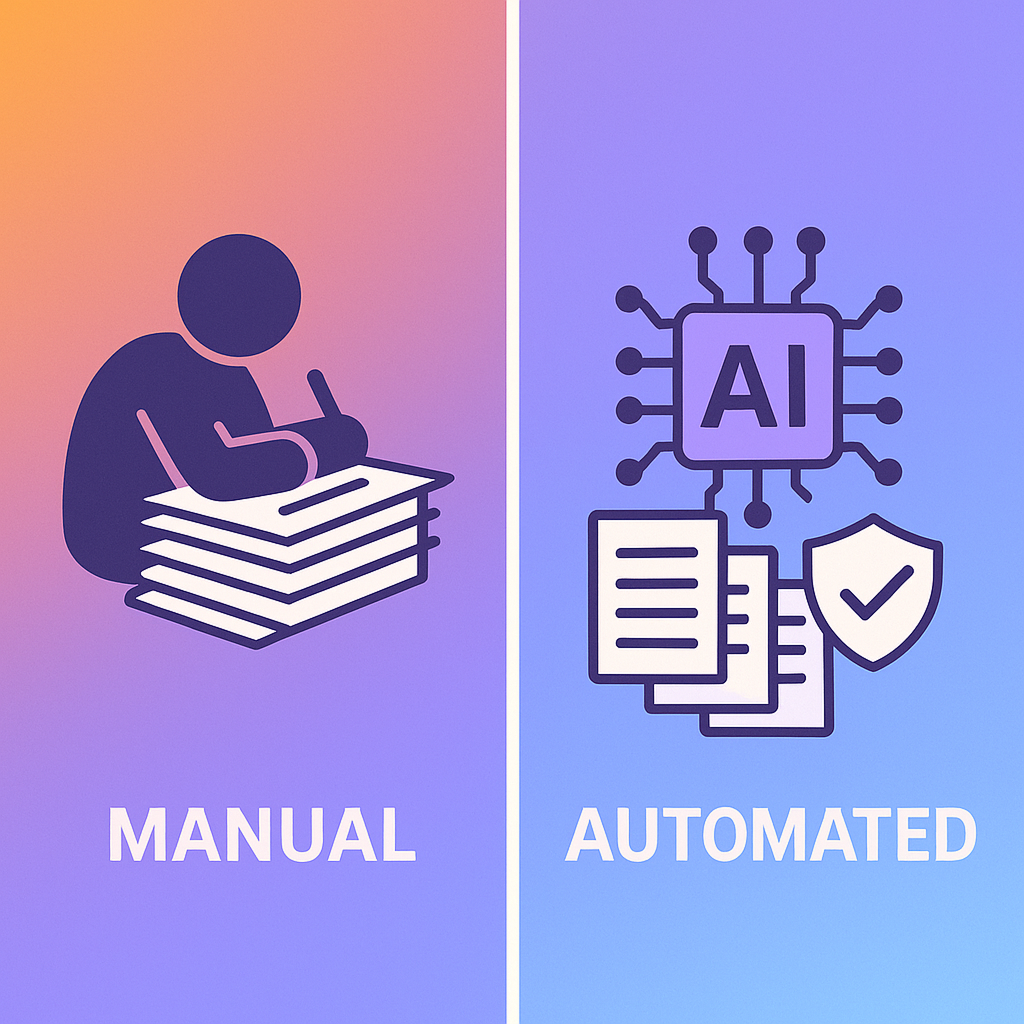
Here's where COI tracking gets complicated fast. COIs expire. Policies are renewed, sometimes with different limits, sometimes with gaps. When you're managing one or two third-party partners, manual follow-up is annoying but manageable. When you're managing dozens, it becomes a full-time job that nobody signed up for.
That's exactly the problem illumend, from myCOI was built to solve. The platform tracks insurance compliance across all your third-party relationships in real time. It surfaces gaps, flags expirations, and keeps your team ahead of renewals without the chasing. At the center of it is Lumie, illumend's AI-powered compliance guide. Lumie reviews COIs, explains what the coverage actually means, flags what's missing, and walks your team through next steps in plain terms. No insurance compliance software background required.
There's no login needed for your third-party partners: they get a link, submit their documentation, and you get instant visibility. Built on 15 years of compliance expertise and integrated with Procore for construction workflows, illumend empowers teams to stay compliant without the chaos.
Ready to make vendor insurance verification feel manageable? Visit illumend.ai to see how it works.