
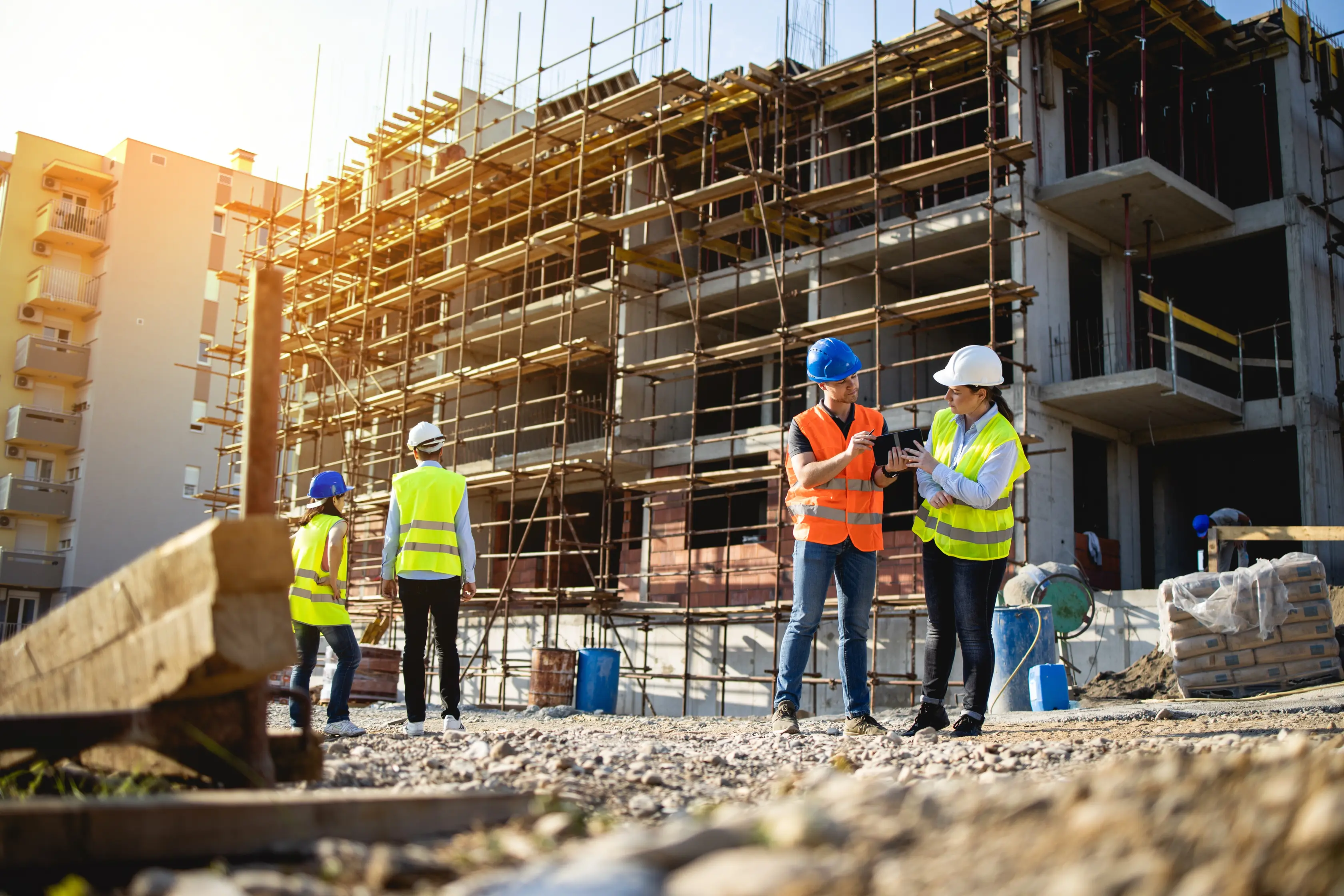


Getting construction coverage right isn't just about checking a box, it's about making sure the numbers actually match the risk on your project. This guide breaks down how coverage is calculated, what the different types mean in practice, and how to spot gaps before they become expensive problems.
What Does "Building Construction Coverage" Actually Mean?
You’re looking at a COI, trying to connect the coverage listed to what’s actually happening on the job. And construction questions like: “Is this actually enough coverage, or am I missing something?” often come up. The numbers and categories are there. But tying them back to what’s actually happening on your job site can still feel unclear.
Part of the confusion comes from two types of coverage showing up around construction projects:
- Builder's risk or commercial property insurance coverage: Builder’s risk or commercial property insurance protects the structure and materials while the project is underway. If there’s damage from weather, fire, or theft, this covers the cost to repair it or rebuild what’s already been completed.
- Liability coverage: You see liability coverage on a certificate of insurance for construction. The coverage applies when your work causes damage to someone else’s property or when someone gets injured on the site.
What Factors Do Insurers Use to Calculate Construction Coverage?
The numbers behind coverage can feel unclear at first, especially when you’re expected to make a call on them. A simple way to think about coverage is as a financial cushion built into the project.
If part of the construction is damaged midway through, the cushion helps you rebuild without starting from scratch. To determine how large that cushion needs to be, insurers typically look at:
- Total construction cost (materials + labor): This forms the baseline for your coverage. If costs rise during the project, you may need to adjust your policy to avoid being underinsured.
- Replacement cost: Insurers focus on what it would cost to rebuild the project, not its market value.
- Project size (square footage): Larger builds cost more to repair and carry greater exposure to risk.
- Construction type: The materials and methods used influence how likely damage is and how severe it could be.
- Location risk: Factors like weather exposure, crime rates, and environmental risks can increase coverage needs.
- Local building codes: Updated regulations may require more expensive materials or methods during a rebuild.
For example, a project is budgeted at $1,000,000, and you’re about halfway through. About $500,000 worth of work is already in place. If damage occurs at this stage, you don’t start over: you need to restore the project to where it was.
That means covering the $500,000 already built, plus additional costs like cleanup, debris removal, and site prep — costs that can add tens of thousands more, depending on the damage. (Debris removal coverage varies by policy, so it's worth confirming whether it's included or requires a separate endorsement.)
In this scenario, the immediate loss could total well beyond $500,000 — once you factor in cleanup, debris removal, and site prep costs, which vary by policy and the nature of the damage. That's why builder's risk coverage is typically set based on the full construction value ($1,000,000) rather than what's been completed to date, so you're protected at every stage of the project.
Does the Construction Type or Location Affect Your Coverage Calculation?
Two projects may look similar, but different materials carry different levels of risk. A steel structure holds up differently than a wood-framed build, especially when it comes to fire and overall durability.
Location adds another layer. Flood-prone or dense urban sites pose risks like weather delays, access challenges, and stricter codes, all of which increase recovery costs.
Then there’s the actual construction cost. Insurers rarely look at the sale value. They focus on what it would take to restore the project to its state before the loss.
That’s why replacement cost value tends to matter more than market value. One reflects what you could sell the project for, the other reflects what it would actually cost to start over.
What Are the Standard Coverage Limits for a Construction Project?
Coverage limits shift from one project to another. They’re based on the size of the job, the risks involved, and what the contract requires.
In most cases, a few core policies show up:
- General liability often starts around $1M per occurrence with a $2M aggregate.
- Workers’ compensation follows state requirements and is expected whenever employees are on site.
- Commercial auto liability typically begins at $1M for owned or hired vehicles.
- Excess or umbrella liability in construction adds an extra layer, often ranging from $1M to $5M or more on larger projects.
How Are Deductibles and Premiums Tied to Your Coverage Calculation?
Coverage limits and deductibles tend to move together. Pushing limits higher usually raises premiums, but it means less of the financial burden falls on you if something goes wrong.
A higher deductible lowers the upfront cost, but you’ll have to cover more yourself before insurance pays. On larger or more complex jobs, even a partial loss can turn into a significant cost you didn't plan for.
Most teams find a balance between what the project calls for and the level of risk involved.
How Do You Know If a Contractor’s Coverage Is Actually Enough?
When a contractor first comes on board, everything usually looks right. The limits meet your requirements, the policies are active, and the COI lines up with what you asked for. But coverage is never fixed. Policies expire, limits change, and endorsements get updated.
So the focus shifts from what coverage looked like on day one to whether it still fits the project today. That’s why verification becomes ongoing.
To judge if coverage is enough, look at three things together:
- Total construction cost, including work already in place
- Replacement cost, or what it would take to rebuild today
- Project risk, based on construction type and location
If coverage doesn’t align with these, it may look fine on paper but fall short when it’s needed.
What Should You Look for on a Certificate of Insurance?
A certificate of insurance (COI) gives you a snapshot of what policies are in place, the limits, and the dates.
From there, coverage can shift. Policies renew, expire, or change, and the certificate doesn’t automatically update with them.
A COI doesn’t reflect cancellations, lapses, or changes after it’s issued, which is where gaps can sneak in. These changes are easy to miss early on. Regular COI verification helps identify gaps early, before they become uncovered claims, delays, or liabilities no one planned for.
How Does illumend Help You Stay on Top of Construction Coverage?
Keeping track of coverage across a project can feel like a moving target. Shifts in requirements, policy updates, and details are easy to miss. This is where illumend, from myCOI, comes in.
illumend empowers teams to stay on top of construction compliance without needing to become insurance experts. The platform tracks and manages coverage across all third-party partners, so you always know where things stand.
Lumie adds clarity, helps you review requirements in real time, flags when something doesn’t meet expectations, and explains what those gaps mean for your project.
Rather than second-guessing coverage decisions, you get direction on what’s missing and what to do next.