
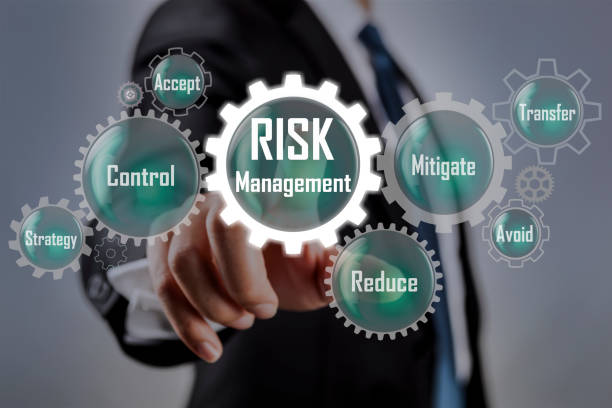
No company is free from risk. Depending on the industry, some companies might only have to contend with a few liabilities. For example, marketing and consulting firms typically have fewer liabilities than construction companies. The construction industry presents more opportunities for injuries and property damage than most fields. It and other high-risk industries face the challenge of protecting themselves from the liabilities that threaten people’s health.

No company can completely eliminate its risk. Accidents happen. People make mistakes. Equipment can fail. However, companies can exert some measure of control over their losses. Companies in all industries can use risk management to help them recognize their risks and how best to handle them.

Risk management should be an essential aspect of any company. Learning about the process not only informs but can create a foundation for creating and carrying out the procedures that can help protect a company from harm.

When should project managers engage in risk management?

They should always practice risk management techniques if they want to see their projects completed on time, under budget, and without incident. Long term, they should practice risk management if they want their companies to remain solvent. The risk management process is a powerful tool to achieve many goals.

Companies can pursue 4 common risk management techniques. Risk acceptance in project management involves acknowledging the loss from risk does not justify spending resources to deal with it. Risk retention accepts a risk and its effects if it is financially feasible to do so. Risk avoidance in project management circumvents any actions that create or increase risk. Risk transfer in project management is the fourth method that many companies employ.

What is risk transfer?

This technique sees a company moving a risk to another entity.

How does risk transfer differ from risk retention? What are some types of risk transfer? Does it have any advantages and drawbacks? This article will answer all of these questions and more.

What Is Risk Transfer In Insurance

Individuals can transfer risk between themselves or, in many cases, to insurance companies.

What is risk transfer in insurance?

Of all the examples of risk transfer in project management, insurance might be the easiest method to implement. Insurance concerns transferring risk from a person to the policy issuer. The person pays a premium while the issuer assumes the risk. The basic idea applies to companies that require their subcontractors to possess sufficient coverage. These companies generally do not want to be held liable for their subcontractor’s actions should they result in bodily or property harm. Most companies can not and do not accept that responsibility. If one must list 4 advantages of transferring risk, then this might be the most significant one: companies are protected against costly claims when they transfer risk to their subcontractors and their insurance issuers.

Although insurance is the common method of risk transfer, it is not the only one. In some instances, it might not be feasible or even possible to require subcontractors to own policies, especially if a company does not hire any. Project managers and companies who assess the major risk transfer advantages and disadvantages can look at a transfer risk example to better understand the concept and decide if this method is right for them.

Risk Transfer Example

Once someone becomes familiar with the risk transfer meaning, they are one step closer to deciding whether or not that method works for them. Looking at examples of risk transfer in project management and comparing them with risk retention examples, for instance, can help companies decide what risk management technique is most suitable. Sometimes, multiple techniques can work together to best protect a company.

Perhaps the easiest to understand risk transfer example is that of insurance. Health, car, and home insurance are seemingly ingrained into the public’s consciousness. Banks usually require homeowners to insure their homes if they have a mortgage. Most states require drivers to have car insurance. Insurance is frequently advertised. Some issuers have even created catchy jingles and memorable mascots to attract consumers to their products. For these companies, insurance is their livelihood. For companies seeking to transfer risk, insurance is the most viable option.

All of this risk transfer examples business is meant to drive the importance of the concept. Risk transfer can help a company survive a potentially catastrophic claim or lawsuit. It is not the only risk management technique that can prove beneficial. Risk retention can work alongside risk transfer in some cases.

Risk Transfer Vs Risk Retention

What is risk retention?

This risk management technique is an individual or company’s decision to take responsibility for a particular risk it encounters. Instead of transferring the risk over to a third party like a subcontractor or their insurance issuer, the entity chooses to accept and pay for any losses that come from claims and litigation. They shoulder the financial burden.

What is risk retention in insurance?

A common example of risk retention in insurance is an individual or company accepting any financial losses after the payment of a deductible.

Companies that comprehend the importance of risk retention can determine which losses are acceptable and how they can minimize them. One of many risk retention examples involves companies weighing the costs of risk management against how much money those techniques can save them. If the costs of avoiding, reducing, or transferring their risks exceed the benefits of those methods, risk retention might work best.

What is risk retention in risk management? How does it differ from risk transfer? Learning the differences between risk transfer vs risk retention can help company leaders make more informed decisions about their risk management policies. Some companies might decide that they can not afford the costs of risk retention. Risk transfer examples promise a brighter future. Seeking risk transfer in insurance can be a cost-effective approach, especially in high-risk industries. However, insurance is not the only type of risk transfer.

Types Of Risk Transfer

The risk transfer insurance approach is just one of several examples of risk transfer. Other common types of risk transfer include making a subcontractor contractually responsible for the risk they create while working, hiring a security company to keep theft to a minimum, and requiring tenants to keep their commercial rental property free of trip hazards. In these cases, the risk is transferred from one entity to another. The risks of a subcontractor’s work, those associated with security work, and those that arise from unattended trip hazards are all transferred from the original entity to someone else.

The company that hired an errant subcontractor can decrease its involvement in claim situations. The same holds true for the store that hired a security outfit and the landlord who rents commercial space. The entities in these examples that accept responsibility for these risks can in turn transfer them to their insurance issuer.

Companies and project managers should also examine risk transfer advantages and disadvantages before deciding on a risk management strategy.

Advantages Of Risk Transfer

Although risk transfer examples illustrate how the technique can function in any situation, they do not often explicitly demonstrate any benefits and drawbacks.

One of the most obvious advantages of risk transfer is that companies that transfer their risk are guarded against any financial losses. Another advantage is that if insured companies or individuals do have to pay out, the amount might be lower due to their coverage.

A major disadvantage of risk transfer is that it creates an added expense for the one who has to manage the risk. In the example of a subcontractor who must possess coverage, they must pay for their policy out of their pocket.

It is important to note that the advantages and disadvantages of risk sharing differ from those of risk transfer because the two similar ideas are not the same. Risk sharing involves multiple entities being responsible for shouldering the burden of a risk. Risk transfer moves the risk from one to another.

Risk Transfer Methods

Risk transfer advantages and disadvantages can point companies to practical ways they can reduce their liabilities. Of all the risk transfer methods, insurance is the most widely accepted. Sometimes, risk transfer in insurance does not end with a subcontractor possessing a policy.

Companies that hire subcontractors and other third parties can transfer their risk to those entities. They can require subcontractors to be insured per their insurance requirements. This transfers risk beyond the subcontractor to the insurance issuer.

However, companies that do this must obtain proof that their subcontractors are insured. Certificates of insurance (COIs) are documents that confirm the subcontractor, the named insured, has sufficient coverage. Companies that collect these forms must verify and monitor them to maintain compliance.

myCOI can help solve their compliance needs. Supported by insurance experts, myCOI automates COI tracking, relieving risk management professionals of all the meticulous work that goes into confirming coverage. Companies can confidently transfer the risk of incorrectly tracking insurance to myCOI.

Proper coverage is a big deal. Partnering with a COI management solution like myCOI could help confirm that subcontractors are getting it right. When they get it wrong, companies can become exposed to the risks they thought were covered.

The next uninsured third-party partner won't announce themselves.

illumend catches the gap.
You save the project.

Get started

Blog & Insights

Moving Beyond the Outdated Insurance Compliance Model

Workers Comp Certificates

Insurance Knowledge
Educational

Workers Compensation Certificates

Insurance Knowledge
Educational

What Is Liability Insurance

Insurance Knowledge
Educational

Blank Certificate Of Insurance

Insurance Knowledge
Educational

Liability Insurance Coverage

Insurance Knowledge
Educational

What Is Business Compliance

Insurance Knowledge
Educational

Personal Certificate Of Liability Insurance

Insurance Knowledge
Educational

What Does Commercial General Liability Cover

Insurance Knowledge
Educational

Certificate Of Liability Insurance Sample

Insurance Knowledge
Educational

General Liability Insurance Coverage

Insurance Knowledge
Educational

General Liability Insurance Certificate

Insurance Knowledge
Educational

Do Subcontractors Need COIs?

Insurance Knowledge
Educational

COI Certification

Insurance Knowledge
Educational

Certificate Of Insurance Management System

Insurance Knowledge
Educational

Insurance Certificate Compliance App

Insurance Knowledge
Educational

Construction Liability Insurance

Insurance Knowledge
Educational

How To Get A Certificate Of Insurance

Insurance Knowledge
Educational

Certificate Of Coverage Insurance

Insurance Knowledge
Educational

Insurance Agency Management System

Insurance Knowledge
Educational

Certificates Of Insurance Best Practices

Insurance Knowledge
Educational

Commercial General Liability Insurance

Insurance Knowledge
Educational

General Contractor Insurance Requirements

Insurance Knowledge
Educational

Certificate Of Insurance For Contractors

Insurance Knowledge
Educational

Certificate Of Insurance For Business

Insurance Knowledge
Educational

Certificate of Insurance for Small Business

Insurance Knowledge
Educational

What Is an ACORD 28?

Learn what an ACORD 28 is and how it is different from the COI you usually see. Discover how illumend can help with ACORD 28 tracking and how to book a demo.
Admin Mastery
Educational

A Guide To the Four Corners Rule and the Duty To Defend

Learn what the four corners rule is and what the duty to defend means in an insurance policy. Discover how illumend can help with insurance compliance.
Admin Mastery
Informational

What's the Difference Between Indemnification & Insurance?

Gain an understanding of the difference between indemnification and insurance, how each manages risk, and when to use them in contracts and coverage planning.
Admin Mastery
Consideration

Additional Insured: Definition, Benefits & Examples

Clear explanation of additional insured status, including definition, key benefits, real-world examples, and how to ensure coverage is in place.
Admin Mastery
Informational

Differences in Additional Insured for Ongoing vs. Completed Operations

Understand the differences in additional insured for ongoing vs. completed operations, what each covers, and when each type applies.
Admin Mastery
Consideration

What Landlords and Tenants Need To Know About Improvements and Betterments Coverage

Explore what improvements and betterments coverage includes and how claims work for tenant upgrades. Learn how illumend can help with insurance compliance.
Admin Mastery
Informational

Why Contractual Liability & Insured Contracts Matter

Discover why contractual liability and insured contracts matter in CGL policies and how they impact risk transfer, indemnity agreements, and COI review.
Admin Mastery
Informational

What Does Primary and Noncontributory Mean in Insurance? — illumend

Primary and noncontributory means the contractor's policy pays first and pays alone; no cost-sharing with your insurer. Learn what it means on a COI and how endorsements work.
Admin Mastery
Informational

What Is a Building Certificate of Insurance? — illumend

A building certificate of insurance confirms a contractor or vendor has active coverage before work begins. Learn what it includes, when you need one & what coverage to require.
Admin 101
Informational

What Is a Certificate of Property Insurance?

Learn what a certificate of property insurance is, what it shows, how it differs from a policy, who needs one, and which ACORD certificate fits your situation.
Admin 101
Educational

Contractor Bonds vs. Insurance: Everything You Need To Know

Explore the differences between contractor bonds and contractor insurance policies, and discover how illumend can help ensure your business is compliant.
Admin Mastery
Consideration

What Does A COI Mean In Real Estate: A COI Guide For Real Estate Agents

What does a COI mean in real estate? This guide explains certificates of insurance, what they include, and how agents can use them to manage risk and stay compliant.
Admin 101
Educational

Certificate Holder vs. an Additional Insured: Everything You Need To Know

Learn about certificates of insurance (COIs), what it means to be a certificate holder vs. an additional insured, and how illumend can help with compliance.
Admin Mastery
Consideration

What Is an ACORD 25 Certificate (And How To Read One)

Learn about ACORD, what an ACORD 25 certificate is, and how to read an ACORD 25 certificate. Explore how illumend can help with insurance compliance today.
Admin Mastery
Informational

What Is an ACORD Insurance Certificate? Types & Uses

Explore various types of ACORD insurance certificates and the uses of ACORD insurance certificates. Learn how illumend can help with insurance compliance.
Admin Mastery
Informational

What Is a Loss Payee? Roles, Benefits, & Processes

Learn what a loss payee is on an insurance policy, explore the benefits of loss payee status, and find out how you can request a loss payee endorsement.
Admin Mastery
Informational

Additional Named Insured vs. Additional Insured: What Is the Difference?

Explore the definition of the additional named insured status and how it is different from the additional insured status. Learn where to find this on a COI.
Admin Mastery
Consideration

How Do You Calculate Building Construction Coverage?

Not sure how to calculate construction coverage? We break down builder’s risk, liability insurance, limits, and key factors.
Admin Mastery
Informational

How Important Is a COI for Contractors?

Explore what a COI is, why contractors need COIs, and the coverage a COI should include. Learn how illumend can help your business with insurance compliance.
Admin 101
Informational

What Is an Experience Modification Rating (EMR) in Workers’ Comp?

Learn what an experience modification rating (EMR) in workers' comp is and how it relates to compliance. Explore how illumend can help with compliance.
Admin Mastery
Educational

What Is A COI In Construction?

Find out what you need to know about certificates of insurance, including coverage types, why you need one, and how to request it.
Admin 101
Educational

How To Check If A Business Has Insurance (And Why It Is Important)

Learn how to check if a business has insurance, what coverage types to verify, and why requesting a certificate of insurance (COI) protects your company.
Insurance Knowledge
Consideration
Admin 101

What Is Third-Party Liability Insurance? Definition & Types

Gain an understanding of third-party insurance. Discover how Illumend simplifies insurance compliance tracking, and schedule a demo to learn more today!
Insurance Knowledge
Educational

What is an Insurance Endorsement?

What is an insurance endorsement? Learn how endorsements modify policies, why additional insured and waiver of subrogation matter, and how they impact compliance.
Insurance Knowledge
Educational

The Hidden Life of a COI Reviewer: Why Your Work Matters More Than You Think

Here’s the thing about COI review: if you’re doing it well, no one notices.No headlines. No applause. Just smooth projects that move forward because you were in the background scanning dates, chasing vendors, and making sure risk didn’t sneak in through the side door.It’s invisible work — but invisible doesn’t mean unimportant. In fact, it’s the glue holding your company together.
Insurance Knowledge
Informational
True Cost

Why COI Tracking Eats Your Lunch Break

It’s 12:15. You finally closed your inbox and opened your lunch. Ping. Another COI just landed. Do you eat now and risk forgetting it — or review now and eat later?
Insurance Knowledge
Educational
Admin 101

What Contractor Insurance Covers & How To Get Proof of Contractor Insurance

Requesting proof of contractor insurance is a routine step that protects your business by confirming coverage is active before work begins.
Admin Mastery
Insurance Knowledge
Consideration

Does My Business Insurance Cover Independent Contractors?

Does business insurance cover independent contractors? Learn what 1099s need, who’s responsible, and how to verify contractor insurance.
Admin 101
Insurance Knowledge
Informational

Why Do Companies Require a COI? Key Business Reasons

Companies require a COI to verify active insurance coverage, transfer liability risk, and ensure vendors meet contract and compliance requirements.
Insurance Knowledge
Educational
Admin 101

What Is the Purpose of a COI & Why It’s So Important

COIs prove a business is properly insured and compliant, reducing risk for partners and vendors. Learn what they cover, why they matter, and how long they’re valid.
Insurance Knowledge
Educational
Admin 101

What Is an ACORD 27?

If you've ever stared at an insurance form with no idea what it means or whether you even need it, this one's for you.
Admin 101
Insurance Knowledge
Educational

When Do You Need A COI For An LLC

When do you need a COI for an LLC? You typically need a certificate of insurance when signing contracts, leasing property, hiring vendors, or starting client work.
Insurance Knowledge
Informational
Admin 101

What Must Be Included in a Certificate Of Insurance?

What must be included in a certificate of insurance? It should list the policyholder, coverage types, limits, effective dates, insurer, and certificate holder details.
Insurance Knowledge
Educational
Admin 101

What Is a Certificate of Insurance: A Complete Guide (2026)

What is a certificate of insurance? Learn what it is, why businesses need one, what details it includes, and how to request a certificate.
Insurance Knowledge
Educational
Admin 101

What Is a COI in Contracting? [Definition & Guide]

What is a COI in contracting? Learn what a Certificate of Insurance is, who provides it, required coverage types, and when contractors need one.
Insurance Knowledge
Educational
Admin 101

What Is The Difference Between A Policy And A Certificate Of Insurance?

The difference between a policy and a certificate of insurance is that a policy defines coverage terms, while a COI summarizes proof of insurance for third parties.
Insurance Knowledge
Educational
Admin 101

What Is A COI Request Form And When Do I Need One?

What is a COI request form? Learn when you need one, why it matters for insurance compliance, and what information a COI request form should include.
Insurance Knowledge
Informational
Admin 101

What Is Professional Liability on a COI?

Professional liability on a COI is proof a vendor has Errors & Omissions coverage, protecting against claims of negligence, mistakes, or failure to deliver services.
Insurance Knowledge
Educational
Admin 101

What Does Indemnity Mean in Insurance?

Learn what indemnity in insurance means, and discover how illumend simplifies insurance compliance and can help you navigate insurance industry language.
Admin 101
Insurance Knowledge
Educational

The Top 10 Most Common Insurance Terms And Their Uses

Because decoding a COI shouldn’t feel like translating ancient scrolls.Insurance compliance often reads like a second language. And most of us didn’t exactly grow up dreaming of cross-referencing policy limits.But here you are — wrangling vendor paperwork, making sense of endorsements, and wondering why a one-page document can cause five-alarm headaches.
Insurance Knowledge
Educational
Admin 101

Insurance 101: What Every Compliance Admin Needs to Know

Learn the basics of insurance compliance so you can start strong and avoid common mistakes.
Insurance Knowledge
Educational
Admin 101

How to Get a COI for an Event: A Simple Step-by-Step Guide

Confused about how to get a COI for an event? Find out when you need a COI, how to request one from vendors, and what you can do to simplify the process.
Insurance Knowledge
Informational
Admin 101

Is a COI the Same as a Declaration Page? Key Differences

A COI is not the same as a declaration page; a COI provides proof of insurance for third parties, while a declaration page outlines policy details for the policyholder.
Insurance Knowledge
Educational
Admin 101

Is COI The Same As Liability Insurance?

Are you a small business owner or operations manager trying to figure out the difference between COI and insurance documents? If so, you're not alone
Insurance Knowledge
Educational
Admin 101

How To Read A Certificate Of Insurance: A Complete Guide

This guide walks you through every section of a COI, so you can confidently review what your contractors and partners send you.
Insurance Knowledge
Educational
Admin 101

How To Add An Additional Insured On A COI

Learn how to add an additional insured on a COI, who to include, when to request it, and how to confirm it’s listed correctly.
Insurance Knowledge
Consideration
Admin Mastery

How To Check The Certificate Holder on a COI?

How to check the certificate holder on a COI: review the “Certificate Holder” section, confirm the legal name, address, and match it to the contract.
Insurance Knowledge
Informational
Admin 101

How To Ask for A COI (And When You Need One)

Request an official Certificate of Insurance (COI) to ensure your vendor has adequate insurance coverage meeting your contractual requirements.
Insurance Knowledge
Educational
Admin 101

Hidden Red Flags: How to Spot Trouble in COIs

On the surface, most Certificates of Insurance (COIs) look the same: one page, lots of boxes, and tiny-print details. But hidden in those lines are red flags that can cost businesses millions if they’re missed.
Insurance Knowledge
Consideration
Smarter Choices

How Do You Show Additional Insurance on a COI?

Confused about “additional insured”? This guide explains what it means, where it appears on a COI, how to add someone to your policy, and how to avoid common COI mistakes.
Insurance Knowledge
Consideration
Admin Mastery

Does AI Add Value to COI Tracking Beyond Traditional Automated Software Solutions or Manual Tracking?

Explore AI in COI tracking, and learn how illumend enables one-click vendor invites, compliance feedback through Lumie™, and seamless Procore integration.
Insurance Knowledge
Educational

Are Subcontractors Required to Have Insurance? A Guide To Subcontractor General Liability Insurance

Before the first nail is driven, here's what every general contractor needs to know about subcontractor insurance and what happens when it's not in place.
Admin 101
Insurance Knowledge
Informational

5 COI Mistakes That Cost the Business Time, Money, and Trust

Certificates of Insurance (COIs) look harmless. One tidy page, a few boxes, a signature. Easy, right?If only.
Insurance Knowledge
Consideration
True Cost

You don't have to understand insurance to be good at insurance compliance.

With Lumie™, compliance is covered. So is everyone on your project.

Get started

Get The Lantern

illumend updates, designed to light the way to insurance confidence.
Thank you! Your submission has been received!
Oops! Something went wrong while submitting the form.