

Insurance Knowledge
Educational

Workers Compensation Certificates

Most of us know what a workers comp certificate is, but let’s cover the basics again just in case. Valid workers’ compensation certification is proof that a business carries workers’ comp coverage. Workers compensation certificates are issued by the insurer at the request of an organization that seeks to confirm that the business is covered. In the same way that you, as the business owner, need to ensure that your business and your employees are covered, so does any business that hires you.

Many businesses are legally required to carry worker’s compensation coverage for their employees. Each state in the United States regulates worker’s compensation coverage under its own laws, which means the potential penalties, fines, and even periods of imprisonment vary.

There are exceptions to the need for workers’ compensation certification, but they are unique to each state. Know the laws in your state. Protect yourself and your employees.

For example, in Indiana, the Indiana Department of Revenue issues a Worker’s Compensation Exemption Certificate Clearance to individual taxpayers who are independent contractors or otherwise not required to carry worker’s compensation insurance on themselves under the Worker’s Compensation Act of Indiana. Persons and/or businesses that qualify for such exemption are issued forms that act as a workers comp exemption letter.

Whether you’re self-employed, a small business owner, or even on the other side as a compliance admin for a large company, workers comp is a complicated, but necessary, process to work through.

Workers Comp Certificate Example

Let’s pretend you’re a new compliance admin who’s just received a worker’s compensation certificate of insurance (COI). Do you know what you’re looking for? Do you know which boxes on the form are the important ones? It’s okay if you don’t: let’s talk about some of the high points. There’s a lot riding on making sure this COI covers both what the contractor says it does, and that the coverage is what your own company expects of those you do business with.

One of the most common workers comp certificate of insurance samples is the common ACORD-25 liability form.
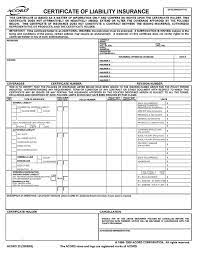
The ACORD 25 is a basic workers comp certificate example. It records and identifies the contractual agreements between the insurer and the insured. Put another way, it helps you know which policies, protections, exemptions and provisions your potential new contractor is carrying.

This form is pretty self-explanatory: the fields and boxes are pretty well labeled, but let’s go through the high points. At the top you’ll have boxes for producer and insured; make sure your contractor is listed in the insured box!

The coverages boxes are where the details are recorded, with fields like general liability, automobile liability, garage liability, excess or umbrella coverage, and finally what we’re here to talk about: workers compensation and employers’ liability. Check the information in these boxes carefully against your company’s requirements. If they don’t line up, then you’ll need to have the contractors adjust their coverage.

Or find a new contractor.

There are a limited number of cases where a subcontractor may present you with a workers comp exemption certificate instead. We’ll talk about those farther down.

Fake Workers Comp Certificate

If you’re a shady contractor looking for tips on how to fake workers comp certificates, keep searching. We’re not talking about that. We’re going to talk about how to catch you. Almost every business that hires contractors has been presented with a fake workers comp certificate at least once. Sometimes these fake certificates are detected; sometimes they’re not. Sometimes it’s too late. Here’s what you can do to spot them before then.

States maintain websites to verify workers compensation. Check those sites. Sometimes they’re hard to find, but it’s an easy Web search. Just put in, for example if you’re in Massachusetts, “proof of coverage ma”. The state verification site will come up. If the contractor you’re evaluating doesn’t show up on that list, that’s a red flag.

You can also look for obvious flaws: does it look copy-and-pasted? Are there obviously six different fonts in use? Is the paper, believe it or not, different colors in different spots? Those sound like childish things to look for, but people trying to circumvent their legal requirements don’t always put the most time into it. They’re counting on you not paying close attention.

Pay close attention.

Seeking proof of workers’ compensation insurance from your contractors and other businesses you do business with is not a hassle for those companies, no matter what they may say. It’s the cost of doing business in today’s litigious world. There is risk apparent in every company, in every industry, and it’s everyone’s job to responsibly manage it.

Workers’ Compensation Certificates Of Insurance For Subcontractors

Workers compensation and subcontractors sometimes gets complicated. Many states make statements like this one from Indiana: individual taxpayers who are independent contractors or otherwise not required to carry worker’s compensation insurance on themselves under the Worker’s Compensation Act of Indiana. But there’s a lot of room around the edges of a statement like that.

Even with that, almost every governing body or advisory body will suggest that you request workers’ compensation certificates of insurance for subcontractors who do business with you. It’s just good practice. Despite not being required, many subcontractors and independent contractors will carry the requisite insurance, and connect you with their agent to request the certificate of workers’ compensation insurance.

You may even get a ghost policy, and no: that’s not a joke. Self-employed individuals with no other employees often carry a policy that excludes them, which gives them workers’ comp with no employees.

That may not seem like it makes any sense, and at first glance it doesn’t, but let’s look at it in more detail.

Ghost Policy Workers’ Comp Definition

The so-called ghost policy workers comp definition is pretty simple. A single-person business, such as a subcontractor who works regularly with a general contractor, buys an affordable workers compensation policy. But here’s where the ghost part comes in: the policy excludes the business owner, so it doesn’t cover anyone. The running joke is that it protects a ghost that follows the subcontractor around.

Why do these subcontractors do this? The simple answer is that general contracting company they always work with probably requires it. Whether or not the policy is actually providing any real protection to anyone (except the ghost) is a conversation for another day. An actual workers comp ghost policy cost can be pretty low.

Many states allow these kinds of policies. Just like above, you find them with quick web searches for things like “workers comp ghost policy Missouri” or “workers comp ghost policy va”.

Even so, holders of ghost policies are often audited, and if the auditor discovers that the policy holder’s eligibility lapsed, the fines can be hefty. That’s why the cheapest workers comp ghost policy may not be the best.

How To Get A Workers’ Comp Certificate

Now let’s go back to pretending you’re that new compliance admin getting through your first month on the job. You just got handed a stack of new contractors the company wants to do business with, but you need to ensure their coverage is acceptable. Here’s how to get a workers’ comp certificate.

It sounds simple, but you just ask for it. A good contractor will have already done their diligence; they will know what your coverage requirements are, and will have either met those requirements or adjusted their coverage with their insurer so they are compliant; these contractors often have the COI handy, and may have already provided it.

Sometimes the contractors aren’t ready. Sometimes they’ll look at you and say “how do I get a copy of my workers’ comp certificate” and you’ll have to tell them to talk to their insurer. Hopefully the hiring organization inside your company will have taken care of this part already, but… hopefully isn’t a good way to stay compliant.

You may find it’s a good idea to keep a sample letter requesting certificate of insurance from subcontractor’s agents. It can save you a lot of time, especially if you’re dealing with a large volume of certificates without the aid of a certificate tracking system.

Workers’ Comp Exemption Sole Proprietorship

We said above, and it’s true, that almost every form of business is legally required to hold workers compensation coverage. We also said there are exceptions for single-employee or sole proprietorships in many states. And even though we said it, and it’s true, it’s still a little confusing. Let’s look again at what the workers’ comp exemption sole proprietorship world looks like.

If you’re a sole proprietor, you can often choose whether or not to carry standard workers comp coverage on yourself, whether to carry a ghost policy, or not carry any coverage. Each of those options has pros and cons. Not carrying coverage is certainly cheaper—unless you get hurt. In that circumstance, carrying workers compensation for yourself, despite the expense, can help defray the cost of your medical bills.

You might find it useful to look at your local workers comp exemption form PDF and see what it says. They’re pretty easy to find with a web search, just put in something like “workers comp exempt form ny” or “workers comp exemption sole proprietorship Florida.” You can usually find what you need in the first couple results.

And don’t forget, especially if you’re a subcontractor who works for a lot of general contractors: sometimes the GC will require you to have coverage, no matter what the law says.

Proof Of Workers’ Compensation Coverage

If you’re a compliance admin, getting proof of workers compensation coverage is a core part of what you do. Usually it’s very simple: contractors will provide their own COIs, and will have done the work to make sure they’re compliant with your rules. You can just check the boxes and the coverages and move on.

But you do have to check. Just having proof of coverage insurance doesn’t mean a contractor is compliant. Sometimes you have to verify or request changes in coverage. Usually you can deal directly with an insured’s insurer to make verifications of coverage amounts, exceptions and limitations.

If you’re just trying to verify whether they’re covered, the internet can be very useful. Basic web searches like these will get you to the state verification sites that list every business or contractor that is maintaining their coverage:

  • workers’ compensation coverage verification Texas
  • verify workers’ compensation coverage New York
  • Georgia workers’ compensation verification
  • New Jersey workers compensation verification
  • California workers’ compensation verification

Putting any of those into a web search will get you on the right path. And always remember, businesses and contractors are responsible for their own coverage. Don’t be afraid to make them pursue their own compliance before you work with them.

The next uninsured third-party partner won't announce themselves.

illumend catches the gap.
You save the project.

Get started

Blog & Insights

Moving Beyond the Outdated Insurance Compliance Model

Workers Comp Certificates

Insurance Knowledge
Educational

What Is Liability Insurance

Insurance Knowledge
Educational

Blank Certificate Of Insurance

Insurance Knowledge
Educational

Liability Insurance Coverage

Insurance Knowledge
Educational

What Is Business Compliance

Insurance Knowledge
Educational

Personal Certificate Of Liability Insurance

Insurance Knowledge
Educational

What Is Risk Transfer

Insurance Knowledge
Educational

What Does Commercial General Liability Cover

Insurance Knowledge
Educational

Certificate Of Liability Insurance Sample

Insurance Knowledge
Educational

General Liability Insurance Coverage

Insurance Knowledge
Educational

General Liability Insurance Certificate

Insurance Knowledge
Educational

Do Subcontractors Need COIs?

Insurance Knowledge
Educational

COI Certification

Insurance Knowledge
Educational

Certificate Of Insurance Management System

Insurance Knowledge
Educational

Insurance Certificate Compliance App

Insurance Knowledge
Educational

Construction Liability Insurance

Insurance Knowledge
Educational

How To Get A Certificate Of Insurance

Insurance Knowledge
Educational

Certificate Of Coverage Insurance

Insurance Knowledge
Educational

Insurance Agency Management System

Insurance Knowledge
Educational

Certificates Of Insurance Best Practices

Insurance Knowledge
Educational

Commercial General Liability Insurance

Insurance Knowledge
Educational

General Contractor Insurance Requirements

Insurance Knowledge
Educational

Certificate Of Insurance For Contractors

Insurance Knowledge
Educational

Certificate Of Insurance For Business

Insurance Knowledge
Educational

Certificate of Insurance for Small Business

Insurance Knowledge
Educational

What Is an ACORD 28?

Learn what an ACORD 28 is and how it is different from the COI you usually see. Discover how illumend can help with ACORD 28 tracking and how to book a demo.
Admin Mastery
Educational

A Guide To the Four Corners Rule and the Duty To Defend

Learn what the four corners rule is and what the duty to defend means in an insurance policy. Discover how illumend can help with insurance compliance.
Admin Mastery
Informational

What's the Difference Between Indemnification & Insurance?

Gain an understanding of the difference between indemnification and insurance, how each manages risk, and when to use them in contracts and coverage planning.
Admin Mastery
Consideration

Additional Insured: Definition, Benefits & Examples

Clear explanation of additional insured status, including definition, key benefits, real-world examples, and how to ensure coverage is in place.
Admin Mastery
Informational

Differences in Additional Insured for Ongoing vs. Completed Operations

Understand the differences in additional insured for ongoing vs. completed operations, what each covers, and when each type applies.
Admin Mastery
Consideration

What Landlords and Tenants Need To Know About Improvements and Betterments Coverage

Explore what improvements and betterments coverage includes and how claims work for tenant upgrades. Learn how illumend can help with insurance compliance.
Admin Mastery
Informational

Why Contractual Liability & Insured Contracts Matter

Discover why contractual liability and insured contracts matter in CGL policies and how they impact risk transfer, indemnity agreements, and COI review.
Admin Mastery
Informational

What Does Primary and Noncontributory Mean in Insurance? — illumend

Primary and noncontributory means the contractor's policy pays first and pays alone; no cost-sharing with your insurer. Learn what it means on a COI and how endorsements work.
Admin Mastery
Informational

What Is a Building Certificate of Insurance? — illumend

A building certificate of insurance confirms a contractor or vendor has active coverage before work begins. Learn what it includes, when you need one & what coverage to require.
Admin 101
Informational

What Is a Certificate of Property Insurance?

Learn what a certificate of property insurance is, what it shows, how it differs from a policy, who needs one, and which ACORD certificate fits your situation.
Admin 101
Educational

Contractor Bonds vs. Insurance: Everything You Need To Know

Explore the differences between contractor bonds and contractor insurance policies, and discover how illumend can help ensure your business is compliant.
Admin Mastery
Consideration

What Does A COI Mean In Real Estate: A COI Guide For Real Estate Agents

What does a COI mean in real estate? This guide explains certificates of insurance, what they include, and how agents can use them to manage risk and stay compliant.
Admin 101
Educational

Certificate Holder vs. an Additional Insured: Everything You Need To Know

Learn about certificates of insurance (COIs), what it means to be a certificate holder vs. an additional insured, and how illumend can help with compliance.
Admin Mastery
Consideration

What Is an ACORD 25 Certificate (And How To Read One)

Learn about ACORD, what an ACORD 25 certificate is, and how to read an ACORD 25 certificate. Explore how illumend can help with insurance compliance today.
Admin Mastery
Informational

What Is an ACORD Insurance Certificate? Types & Uses

Explore various types of ACORD insurance certificates and the uses of ACORD insurance certificates. Learn how illumend can help with insurance compliance.
Admin Mastery
Informational

What Is a Loss Payee? Roles, Benefits, & Processes

Learn what a loss payee is on an insurance policy, explore the benefits of loss payee status, and find out how you can request a loss payee endorsement.
Admin Mastery
Informational

Additional Named Insured vs. Additional Insured: What Is the Difference?

Explore the definition of the additional named insured status and how it is different from the additional insured status. Learn where to find this on a COI.
Admin Mastery
Consideration

How Do You Calculate Building Construction Coverage?

Not sure how to calculate construction coverage? We break down builder’s risk, liability insurance, limits, and key factors.
Admin Mastery
Informational

How Important Is a COI for Contractors?

Explore what a COI is, why contractors need COIs, and the coverage a COI should include. Learn how illumend can help your business with insurance compliance.
Admin 101
Informational

What Is an Experience Modification Rating (EMR) in Workers’ Comp?

Learn what an experience modification rating (EMR) in workers' comp is and how it relates to compliance. Explore how illumend can help with compliance.
Admin Mastery
Educational

What Is A COI In Construction?

Find out what you need to know about certificates of insurance, including coverage types, why you need one, and how to request it.
Admin 101
Educational

How To Check If A Business Has Insurance (And Why It Is Important)

Learn how to check if a business has insurance, what coverage types to verify, and why requesting a certificate of insurance (COI) protects your company.
Insurance Knowledge
Consideration
Admin 101

What Is Third-Party Liability Insurance? Definition & Types

Gain an understanding of third-party insurance. Discover how Illumend simplifies insurance compliance tracking, and schedule a demo to learn more today!
Insurance Knowledge
Educational

What is an Insurance Endorsement?

What is an insurance endorsement? Learn how endorsements modify policies, why additional insured and waiver of subrogation matter, and how they impact compliance.
Insurance Knowledge
Educational

The Hidden Life of a COI Reviewer: Why Your Work Matters More Than You Think

Here’s the thing about COI review: if you’re doing it well, no one notices.No headlines. No applause. Just smooth projects that move forward because you were in the background scanning dates, chasing vendors, and making sure risk didn’t sneak in through the side door.It’s invisible work — but invisible doesn’t mean unimportant. In fact, it’s the glue holding your company together.
Insurance Knowledge
Informational
True Cost

Why COI Tracking Eats Your Lunch Break

It’s 12:15. You finally closed your inbox and opened your lunch. Ping. Another COI just landed. Do you eat now and risk forgetting it — or review now and eat later?
Insurance Knowledge
Educational
Admin 101

What Contractor Insurance Covers & How To Get Proof of Contractor Insurance

Requesting proof of contractor insurance is a routine step that protects your business by confirming coverage is active before work begins.
Admin Mastery
Insurance Knowledge
Consideration

Does My Business Insurance Cover Independent Contractors?

Does business insurance cover independent contractors? Learn what 1099s need, who’s responsible, and how to verify contractor insurance.
Admin 101
Insurance Knowledge
Informational

Why Do Companies Require a COI? Key Business Reasons

Companies require a COI to verify active insurance coverage, transfer liability risk, and ensure vendors meet contract and compliance requirements.
Insurance Knowledge
Educational
Admin 101

What Is the Purpose of a COI & Why It’s So Important

COIs prove a business is properly insured and compliant, reducing risk for partners and vendors. Learn what they cover, why they matter, and how long they’re valid.
Insurance Knowledge
Educational
Admin 101

What Is an ACORD 27?

If you've ever stared at an insurance form with no idea what it means or whether you even need it, this one's for you.
Admin 101
Insurance Knowledge
Educational

When Do You Need A COI For An LLC

When do you need a COI for an LLC? You typically need a certificate of insurance when signing contracts, leasing property, hiring vendors, or starting client work.
Insurance Knowledge
Informational
Admin 101

What Must Be Included in a Certificate Of Insurance?

What must be included in a certificate of insurance? It should list the policyholder, coverage types, limits, effective dates, insurer, and certificate holder details.
Insurance Knowledge
Educational
Admin 101

What Is a Certificate of Insurance: A Complete Guide (2026)

What is a certificate of insurance? Learn what it is, why businesses need one, what details it includes, and how to request a certificate.
Insurance Knowledge
Educational
Admin 101

What Is a COI in Contracting? [Definition & Guide]

What is a COI in contracting? Learn what a Certificate of Insurance is, who provides it, required coverage types, and when contractors need one.
Insurance Knowledge
Educational
Admin 101

What Is The Difference Between A Policy And A Certificate Of Insurance?

The difference between a policy and a certificate of insurance is that a policy defines coverage terms, while a COI summarizes proof of insurance for third parties.
Insurance Knowledge
Educational
Admin 101

What Is A COI Request Form And When Do I Need One?

What is a COI request form? Learn when you need one, why it matters for insurance compliance, and what information a COI request form should include.
Insurance Knowledge
Informational
Admin 101

What Is Professional Liability on a COI?

Professional liability on a COI is proof a vendor has Errors & Omissions coverage, protecting against claims of negligence, mistakes, or failure to deliver services.
Insurance Knowledge
Educational
Admin 101

What Does Indemnity Mean in Insurance?

Learn what indemnity in insurance means, and discover how illumend simplifies insurance compliance and can help you navigate insurance industry language.
Admin 101
Insurance Knowledge
Educational

The Top 10 Most Common Insurance Terms And Their Uses

Because decoding a COI shouldn’t feel like translating ancient scrolls.Insurance compliance often reads like a second language. And most of us didn’t exactly grow up dreaming of cross-referencing policy limits.But here you are — wrangling vendor paperwork, making sense of endorsements, and wondering why a one-page document can cause five-alarm headaches.
Insurance Knowledge
Educational
Admin 101

Insurance 101: What Every Compliance Admin Needs to Know

Learn the basics of insurance compliance so you can start strong and avoid common mistakes.
Insurance Knowledge
Educational
Admin 101

How to Get a COI for an Event: A Simple Step-by-Step Guide

Confused about how to get a COI for an event? Find out when you need a COI, how to request one from vendors, and what you can do to simplify the process.
Insurance Knowledge
Informational
Admin 101

Is a COI the Same as a Declaration Page? Key Differences

A COI is not the same as a declaration page; a COI provides proof of insurance for third parties, while a declaration page outlines policy details for the policyholder.
Insurance Knowledge
Educational
Admin 101

Is COI The Same As Liability Insurance?

Are you a small business owner or operations manager trying to figure out the difference between COI and insurance documents? If so, you're not alone
Insurance Knowledge
Educational
Admin 101

How To Read A Certificate Of Insurance: A Complete Guide

This guide walks you through every section of a COI, so you can confidently review what your contractors and partners send you.
Insurance Knowledge
Educational
Admin 101

How To Add An Additional Insured On A COI

Learn how to add an additional insured on a COI, who to include, when to request it, and how to confirm it’s listed correctly.
Insurance Knowledge
Consideration
Admin Mastery

How To Check The Certificate Holder on a COI?

How to check the certificate holder on a COI: review the “Certificate Holder” section, confirm the legal name, address, and match it to the contract.
Insurance Knowledge
Informational
Admin 101

How To Ask for A COI (And When You Need One)

Request an official Certificate of Insurance (COI) to ensure your vendor has adequate insurance coverage meeting your contractual requirements.
Insurance Knowledge
Educational
Admin 101

Hidden Red Flags: How to Spot Trouble in COIs

On the surface, most Certificates of Insurance (COIs) look the same: one page, lots of boxes, and tiny-print details. But hidden in those lines are red flags that can cost businesses millions if they’re missed.
Insurance Knowledge
Consideration
Smarter Choices

How Do You Show Additional Insurance on a COI?

Confused about “additional insured”? This guide explains what it means, where it appears on a COI, how to add someone to your policy, and how to avoid common COI mistakes.
Insurance Knowledge
Consideration
Admin Mastery

Does AI Add Value to COI Tracking Beyond Traditional Automated Software Solutions or Manual Tracking?

Explore AI in COI tracking, and learn how illumend enables one-click vendor invites, compliance feedback through Lumie™, and seamless Procore integration.
Insurance Knowledge
Educational

Are Subcontractors Required to Have Insurance? A Guide To Subcontractor General Liability Insurance

Before the first nail is driven, here's what every general contractor needs to know about subcontractor insurance and what happens when it's not in place.
Admin 101
Insurance Knowledge
Informational

5 COI Mistakes That Cost the Business Time, Money, and Trust

Certificates of Insurance (COIs) look harmless. One tidy page, a few boxes, a signature. Easy, right?If only.
Insurance Knowledge
Consideration
True Cost

You don't have to understand insurance to be good at insurance compliance.

With Lumie™, compliance is covered. So is everyone on your project.

Get started

Get The Lantern

illumend updates, designed to light the way to insurance confidence.
Thank you! Your submission has been received!
Oops! Something went wrong while submitting the form.