



Across industries and trades, contractors often do work in environments prone to liability. Like it or not, every day, these workers are opening themselves up to risk, both physically and financially. Seasoned contractors will be sure to come prepared for every new project with comprehensive general liability coverage that protects their interests.
In this blog, we’re talking about contractor liability insurance, namely general liability insurance and how it can bolster contractors’ professional reputations while protecting them from financial losses that arise from third-party claims.
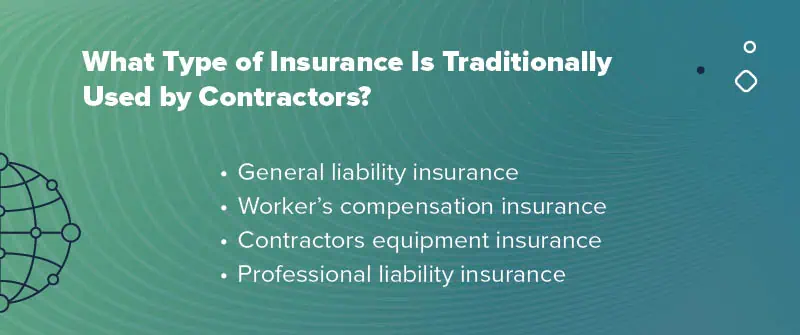
What Type of Insurance Is Traditionally Used by Contractors?
Carrying proper insurance protection is a common construction risk management strategy where, in exchange for a monthly fee (also known as a premium), an organization agrees to compensate an individual or business in the event of specific losses. Contractors will generally carry multiple kinds of insurance policies in order to ensure that their business, employees, equipment, etc., are protected from risk. A few of those include:
- General liability insurance for contractors
- Worker’s compensation insurance
- Contractors equipment insurance
- Professional liability insurance (also known as errors & omissions insurance)
What Is Contractors General Liability Insurance?
Contractors’ general liability insurance coverage refers to general liability policies carried by contractors such as general contractors and subcontractors, carpenters, and other related tradespeople. General liability insurance in the construction industry provides coverage for third-party claims related to property damage, bodily injury, or personal injury that happens because of a contractor’s work. For an injury-prone industry, general liability insurance is essential coverage for contractors to have–some project owners even require it.
What Damages Are Covered by a CGL Policy?
Construction sites are areas that commonly see accidents and related third-party claims. Acquiring and maintaining comprehensive general liability coverage is, therefore, a major priority for those involved in the work. The damages covered by CGL policies typically include:
- Bodily injury (including medical expenses and lost wages of the injured party)
- Property damage (such as repair or replacement costs for damaged property, as well as loss of use or rental income)
- Personal and advertising injury (covering claims like defamation, libel, slander, copyright infringement, and false advertising)
- Defense costs (including attorney fees, court costs, and settlements resulting from covered claims)
How Much Is Contractor Insurance?
General contractor insurance costs can start to add up as they continue to safeguard their business with protection from legal policies like general liability insurance. Pricing will differ per contractor based on factors like the size of their business, the scope of their work, the location they’re operating in, coverage limits, claims history, and more.
On average, however, smaller contracting businesses can expect to pay anywhere from a few hundred to a few thousand dollars per year for their general liability protection. Larger firms can expect to pay significantly more for adequate protection.
Is General Liability Worth It? What Does General Liability Insurance Cover?
For many reasons, general liability insurance is not just practical for contractors to hold–it’s necessary. General liability insurance is worth it for contractors because it will ultimately protect them from having to pay out-of-pocket for damages that are likely to arise because of their work.
Oftentimes, project owners and clients will even provide contractor insurance requirements that include that the contractors they work with must carry general liability insurance as part of contract agreements to minimize their liability exposure.
Finally, it doesn’t just protect a contractor’s financial interests but also their professional reputation and brand. Contractors who carry general liability insurance give off a competent and polished image, both because they show up prepared and proactively protected for a job and because they don’t wind up getting their clients involved in expensive litigation stemming from easily avoidable claims. It’s no wonder that contractors’ general liability insurance is considered standard across the industry!
What Does General Liability Insurance Cost If Your Contractors Don’t Have It?
Considering everything that general liability insurance covers, you might think it costs a lot. The thing is, not having certificate of insurance for contractors can cost even more. For starters, you could face legal fees, potential workers’ compensation claims, medical payments, and more. Beyond financial protection, you need insured contractors to remain compliant.
Mitigate Risk with General Liability Insurance Policy Certificates of Insurance
You may be wondering what the best contractors’ general liability insurance is. Our answer? An active policy that adequately protects your business from third-party claims… that you have proof of.
Ensure that your general contractors and subcontractors are safeguarding both your and their interests with general liability insurance by requesting a certificate of insurance (COI) from them and by staying up-to-date on their coverage. Doing so will mitigate risk for all parties.
Want to learn more about contractors’ general liability insurance or how to better manage third-party certificates of insurance to reduce your liability? Give us a call today.